The most expensive driveway choice in Lubbock often becomes the cheapest one after just 84 months of West Texas sun and shifting soil. You’ve likely seen it happen; a beautiful new surface develops deep cracks or heat-warped edges because it wasn’t built for the South Plains. We understand the frustration of seeing your hard-earned investment settle into the caliche or crumble under 100-degree temperatures. It’s a common problem in an environment where the ground can shift 2 inches during a single season.
At Zahn Paving, we believe your home’s first impression should be built to last. This guide settles the asphalt vs concrete driveway texas debate by comparing the real-world durability, maintenance, and costs of both materials in our unique climate. We’ll show you how to achieve a 20-year lifespan and high curb appeal without getting buried in repair bills. You’ll learn exactly how these materials handle extreme UV exposure and which one offers the best low-maintenance solution for our dusty, high-wind environment.
Key Takeaways
- Understand how Lubbock’s intense UV radiation and extreme temperature swings dictate the actual lifespan of your pavement.
- Discover why the “maintenance-free” concrete myth fails in West Texas and how strategic sealcoating protects your asphalt investment.
- Compare the upfront costs and long-term value of an asphalt vs concrete driveway texas homeowners can expect in the current market.
- Learn why professional grading and expert dirt work are more critical to your driveway’s success than the surface material itself.
- Identify which paving solution offers the fastest curing time to get your vehicles back on the drive despite the notorious Lubbock wind.
Choosing the Right Driveway for Lubbock’s Extreme Climate
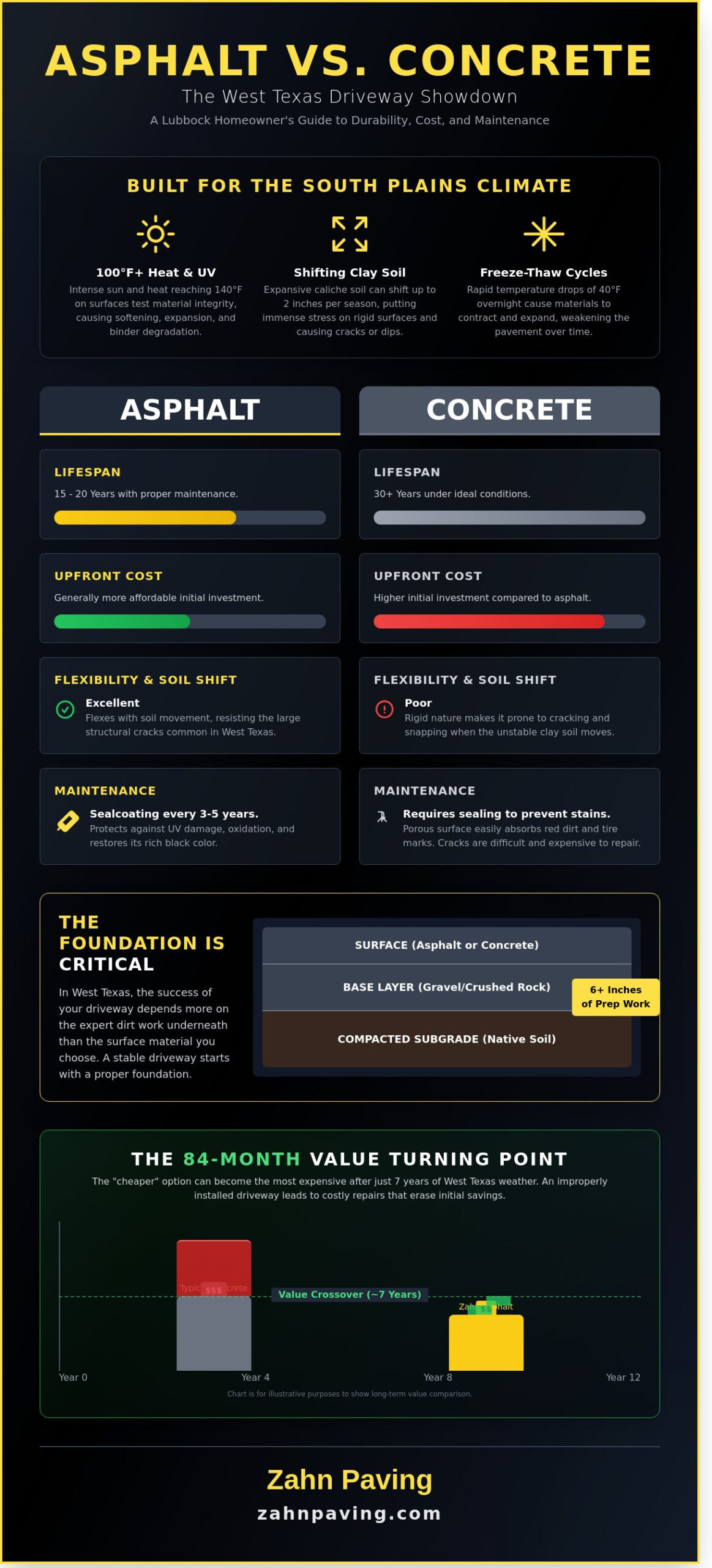
Lubbock homeowners face a unique set of environmental challenges that test the limits of any paving material. In the South Plains, summer temperatures frequently exceed 100 degrees for weeks at a time. These high temperatures combined with over 260 days of intense annual sunshine create a punishing environment for residential surfaces. The debate over an asphalt vs concrete driveway texas residents often have centers on how these materials react to our specific climate cycles. Beyond the heat, our region deals with rapid freeze-thaw cycles where temperatures can drop 40 degrees in a single evening. This puts immense pressure on the structural integrity of your pavement.
Lubbock’s soil adds another layer of complexity to every project. Much of the local ground consists of clay-rich soil that heaves or expands significantly when moisture hits. This movement can snap rigid surfaces or cause flexible ones to dip if the foundation isn’t set correctly. UV radiation also plays a critical role in long-term degradation. High-intensity sunlight breaks down the chemical binders in asphalt concrete, which leads to oxidation and a brittle surface over time. At Zahn Paving, we’ve seen how these local variables dictate the lifespan of a driveway. Choosing the right material requires a technical understanding of these specific West Texas factors.
The Impact of West Texas Heat on Pavement
During a peak July afternoon, asphalt surfaces can reach temperatures of 140 degrees or higher. This intense heat causes the bitumen binder to soften. It makes the surface susceptible to scuffing or indentations from heavy trailers and parked vehicles. Concrete remains rigid but undergoes significant thermal expansion. Without strategic expansion joints placed every 10 to 12 feet, the internal pressure will cause the slabs to buckle or pop. For families, the heat island effect is a real concern. Asphalt stays hot long after sunset. This can be uncomfortable for pets or children playing outside compared to the cooler, reflective surface of light-colored concrete.
Dust and Wind: The Aesthetic Challenge
Lubbock is famous for its wind and red dust. When we install fresh asphalt, the sticky nature of the new binder can trap blowing silt during the first few weeks of curing. This often gives new driveways a temporary brown tint until the first heavy rain washes it clean. Concrete faces a different aesthetic struggle. Its light, porous surface acts as a canvas for red dirt stains and black tire marks. We often recommend specific broom finishes or high-quality sealants to help mask these regional environmental factors. A well-chosen finish ensures your investment maintains its curb appeal despite the persistent West Texas elements.
Performance Breakdown: Asphalt vs. Concrete in West Texas
Choosing between materials requires understanding how they react to the local climate. The asphalt vs concrete driveway texas debate often centers on longevity and initial cost. Asphalt typically offers a functional lifespan of 15 to 20 years. In contrast, a well-poured concrete driveway can last 30 years or longer. While concrete wins on pure duration, asphalt provides a flexible response to the shifting caliche base found throughout Lubbock. This flexibility prevents the immediate surface failures often seen in rigid materials when the ground moves.
- Load Capacity: Concrete handles heavy static loads, like parked RVs, without deforming.
- Flexibility: Asphalt moves with the soil, reducing the risk of large structural snaps.
- Maintenance: Asphalt requires sealcoating every 3 to 5 years to maintain its integrity.
Durability and Lifespan in the South Plains
West Texas soil is notoriously unstable. When the ground shifts under your driveway, a rigid concrete slab may develop deep structural cracks. Asphalt is a viscous material; it stretches slightly to accommodate minor soil expansion and contraction. This makes it a resilient choice for the high-clay content areas surrounding Lubbock. The asphalt vs concrete driveway texas comparison also hinges on how each material handles the intense UV exposure of the South Plains. Residential concrete driveways in Lubbock must meet a minimum compressive strength of 3,000 PSI to ensure the slab remains intact during the 40-degree temperature swings common in the fall.
If your property sits on a particularly soft subgrade, we focus on the excavation process first. A stable driveway starts 6 inches below the surface. You can consult with Zahn Paving to determine if your specific lot requires additional base stabilization before pouring or paving begins.
Usability and Curing Speed
Installation speed is a major differentiator for Lubbock homeowners. You can drive a car on a new asphalt surface within 24 to 48 hours. Concrete requires a 7-day curing period before it can support the weight of a standard vehicle. This delay creates a window of vulnerability. Lubbock’s 25-mile-per-hour winds often carry dust and debris that can embed in wet concrete, compromising the aesthetic finish. Asphalt sets quickly, minimizing the time your property remains a construction zone. Understanding the full asphalt paving process from excavation to final compaction can help you set realistic expectations for your project timeline and outcome.
Safety during winter weather is another factor. Asphalt’s black surface absorbs solar heat, which melts ice 20% faster than light-colored concrete. However, concrete’s broom-finish texture provides superior grip during the freezing rain events that occur between December and February. Both materials perform well, but your choice should align with how quickly you need to regain access to your garage.
The Maintenance Myth: Protecting Your Investment
Many Lubbock homeowners believe concrete is a “one and done” solution. This misconception leads to premature slab failure and unexpected costs. In the South Plains, the soil moves and the sun bakes every outdoor surface. When evaluating an asphalt vs concrete driveway texas heat and soil conditions are the primary drivers of your maintenance schedule. No driveway is truly maintenance-free; success depends on how you manage the inevitable wear and tear of the West Texas climate.
The Zahn Paving approach focuses on proactive care to extend the life of your surface. We see 85% of structural failures caused by simple neglect of cracks and joints. Whether you choose the flexibility of asphalt or the rigidity of concrete, your investment requires a specific protection plan to handle 100-degree summers and freezing winter nights.
Asphalt Maintenance: Sealcoating and Crack Sealing
Sealcoating is vital. It acts like high-grade sunscreen for your pavement. We recommend a professional application every 36 to 48 months to shield the bitumen binder from oxidation. In Lubbock, the intense UV rays strip the oils from asphalt, making it brittle and grey. Without this protective layer, you will eventually see “alligator cracking.” This pattern of interconnected breaks indicates that the base has been compromised. Crack sealing is your first line of defense. It prevents 90% of water infiltration into the subgrade, keeping the foundation stable. A fresh sealcoat also restores that deep black finish, providing an immediate boost to your property’s curb appeal.
Asphalt is uniquely repairable. We can perform precision patching by saw-cutting a damaged area and installing fresh material that bonds to the original surface. Concrete doesn’t offer this flexibility. You can’t patch a structural crack in a slab and expect it to hold or look seamless. This makes asphalt a more manageable long-term choice for those who value cost-effective repairs over the lifespan of the driveway. If you want to stay ahead of surface deterioration, reviewing a dedicated asphalt repair in Lubbock maintenance checklist can help you identify early warning signs of heat damage before they become costly structural problems. For a deeper look at how asphalt paving in Lubbock, TX holds up against the region’s harshest conditions, our complete property owner’s guide covers everything from sub-base preparation to long-term UV protection strategies.
Concrete Care: Joints and Sealing
Concrete requires a different brand of vigilance. You must keep expansion joints clear of West Texas grit and silt. When Lubbock wind packs these gaps with dirt, the concrete has no room to expand during the peak of summer. This pressure causes the slabs to buckle or “tent,” leading to trip hazards and expensive replacements. We suggest applying a high-quality topical sealer every 24 to 36 months. This barrier prevents fine dust from penetrating the pores of the material. It also makes it significantly easier to wash away oil stains or chemical spills. On a light-colored surface, a single oil leak becomes a permanent eyesore without a proper sealant. When choosing between an asphalt vs concrete driveway texas property owners should consider if they are willing to perform the regular cleaning and joint maintenance concrete demands.
Cost Analysis: Upfront Price vs. Long-Term Value
Lubbock property owners face a significant financial decision when evaluating asphalt vs concrete driveway texas options in 2026. Material costs and labor rates in West Texas have shifted, making it essential to look past the initial quote. A driveway is a foundational investment that dictates your property’s functionality for the next two decades. At Zahn Paving, we believe in providing a clear breakdown of where your money goes and how it works for you over time.
Initial Installation Costs
Asphalt remains the most budget-friendly choice for homeowners, especially those with longer rural or ranch-style entries. Current 2026 market data shows asphalt installation in Lubbock ranging from $4.50 to $6.75 per square foot. In contrast, a standard concrete driveway typically costs $10.50 to $15.00 per square foot. This 40% to 60% price gap exists because concrete requires more intensive site preparation, including specialized forms and steel rebar reinforcement to handle the shifting High Plains soil. If you are paving a large area, the upfront savings of asphalt can reach several thousand dollars, which many owners choose to reinvest into high-quality sealcoating or other property improvements. For detailed information about current pricing and factors that affect your specific project, you can explore our comprehensive guide on asphalt driveway cost in Lubbock to understand the full scope of your investment.
Resale Value and Curb Appeal
Concrete is often viewed as a premium architectural upgrade. It provides a crisp, clean border that can increase a Lubbock home’s appraisal value by 5% to 8% compared to unpaved or damaged surfaces. However, modern asphalt offers a sleek, dark aesthetic that perfectly complements the sprawling ranch-style homes common in our region. Your choice should depend on your timeline. If you plan to sell within 5 years, the immediate “wow factor” of concrete might yield a higher return. If you intend to stay for 15 years or more, the lower entry price of asphalt allows you to maintain a professional surface while keeping your liquid capital available for other needs.
Calculating the 20-year Total Cost of Ownership (TCO) involves more than just the first check you write. Consider these factors:
- Maintenance Cycles: Asphalt needs sealcoating every 3 to 5 years to protect against UV oxidation.
- Repair Flexibility: Asphalt is easier and cheaper to patch if the ground shifts.
- Longevity: Concrete can last 30 years or more but requires expensive slab replacement if it cracks severely.
- Climate Resistance: Asphalt handles the extreme temperature swings of West Texas by remaining flexible.
Choosing between asphalt vs concrete driveway texas requires balancing your current budget with your future expectations for the property. Our team has spent decades helping Lubbock residents find the right fit for their specific acreage and soil conditions. We focus on delivering a surface that stands up to the heat and the wind without breaking your project budget.
Ready to see the numbers for your specific property? Get a detailed quote from Zahn Paving today.
Professional Installation: Why the Foundation Matters Most
Whether you choose asphalt or concrete, your driveway is only as good as what’s underneath it. At Zahn Paving, we’ve spent 75 years perfecting the art of West Texas dirt work. Since 1949, our family has understood that the South Plains presents unique challenges, from shifting silt to intense thermal expansion. When comparing an asphalt vs concrete driveway texas property owners must realize that neither material will last without a stabilized base. We don’t just pour over raw earth; we engineer a platform designed to withstand 100-degree summers and sudden freezes.
A critical component of our process is the caliche base. Caliche is a calcium carbonate-rich soil common in our region that, when properly processed, creates a rock-hard foundation. This layer acts as the backbone of your driveway, preventing the sinking and “alligator cracking” often seen in sub-par installations. We prioritize a deep caliche sub-base because it ensures your investment stays level for decades. Without this specific material, the heavy clay content in Lubbock soil would cause your pavement to shift and buckle during the first heavy rain cycle.
Site Prep: The Zahn Paving Difference
We start every project with precision excavation and grading. In Lubbock, water is the primary enemy of pavement. If your site isn’t graded to a minimum 1% slope, standing water will eventually compromise the surface and lead to potholes. Our team uses advanced equipment to achieve 95% Proctor density compaction before the first load of material arrives. This level of density is what prevents ruts from forming under the weight of heavy vehicles. You can learn more about our professional earth works in Lubbock to see how we build from the ground up.
Choosing Your Partner in Paving
Choosing a contractor means finding someone who stands behind their name. As a family-owned and operated business, Zahn Paving brings three generations of local expertise to every job site. When you’re deciding on an asphalt vs concrete driveway texas project, your estimate should include detailed line items regarding base thickness and drainage plans. A cheap quote often masks a lack of site prep that leads to surface failure within 24 to 36 months. We invite you to explore our concrete paving services in Lubbock to see the Zahn commitment to quality in action. We do it right the first time because our reputation is paved into every street and driveway we finish.
Secure Your Property’s Value with a Professional West Texas Surface
Choosing between an asphalt vs concrete driveway texas requires more than just picking a color. It’s about how your surface handles 100-degree Lubbock summers and shifting soil. While concrete offers rigid durability, asphalt provides the flexibility needed to prevent cracks during extreme temperature swings. Regardless of the material you choose, the success of your project depends on specialized dirt work and a solid foundation designed for our specific local environment. A poorly prepped base will fail long before the surface does.
Since 1946, Zahn Paving has served as the region’s trusted authority on residential and commercial surfaces. We are 4th generation paving experts who understand that a driveway is a long-term investment in your property’s safety and curb appeal. We don’t just lay pavement; we build lasting infrastructure backed by 78 years of local experience and specialized West Texas dirt work. Our team ensures every project starts with a stable foundation so your investment remains smooth and functional for decades.
Get a Free Paving Estimate from Zahn Paving Today
Your property deserves a surface that’s built to last through every West Texas season.
Frequently Asked Questions
Is asphalt or concrete better for the hot Lubbock sun?
Concrete generally stays cooler in the 100-degree Lubbock summers because its lighter color reflects solar radiation. Asphalt absorbs heat and can reach surface temperatures of 145 degrees Fahrenheit on a typical July afternoon. While asphalt softens in extreme heat, it handles the rapid temperature drops of West Texas nights without the brittle cracking often seen in rigid concrete slabs.
How much does an asphalt driveway cost compared to concrete in Texas?
Asphalt driveways typically cost 40% to 50% less than concrete installations in West Texas. On average, you can expect to pay $4 to $6 per square foot for asphalt, while concrete prices often range from $8 to $14 per square foot depending on the finish. This price gap makes asphalt the more budget-friendly option when comparing an asphalt vs concrete driveway texas project for larger rural properties or long residential entries.
Will my driveway crack because of the caliche soil in West Texas?
Proper excavation and a 6-inch compacted stone base prevent caliche soil from destroying your driveway. Caliche expands and contracts with moisture changes, which exerts upward pressure on the pavement. Zahn Paving ensures a stable foundation by removing reactive topsoil and replacing it with engineered fill. This professional preparation reduces the risk of structural cracking by 90% compared to driveways poured directly on raw Lubbock dirt.
How often do I need to sealcoat my asphalt driveway in Lubbock?
You should apply a professional sealcoat to your asphalt every 3 to 5 years to protect it from UV oxidation. In the high-UV environment of West Texas, the sun breaks down the liquid asphalt binder that holds the stones together. A fresh sealcoat acts as a sacrificial barrier. Routine maintenance every 48 months can double the lifespan of your pavement, extending its utility from 15 years to over 30 years.
Can you pour a new asphalt driveway over an old concrete one?
Yes, we can install an asphalt overlay over existing concrete if the original slab is structurally sound and lacks major heave. This process involves applying a tack coat to ensure the two materials bond securely. We typically use a 2-inch layer of hot-mix asphalt for these projects. It’s a faster way to refresh your property’s look without the $3,000 cost of a full concrete demolition and haul-away.
How long do I have to wait to drive on my new driveway?
You can drive a standard passenger vehicle on a new asphalt driveway within 24 to 72 hours of completion. Concrete requires a much longer curing period, usually 7 full days before it can support the weight of a 4,000-pound car. For heavy trucks or trailers, we recommend waiting at least 14 days on concrete to ensure the material reaches its 3,500 PSI design strength.
Does a concrete driveway add more value to my home than asphalt?
Concrete driveways often provide a 10% to 15% higher boost to residential property values in urban Lubbock neighborhoods. Many homebuyers perceive the clean, light-colored look of concrete as a premium feature. However, a well-maintained asphalt driveway from Zahn Paving still offers significant curb appeal. It provides a smooth, black finish that looks professional and clean while saving the homeowner thousands in upfront construction costs.
What is the best way to prevent weeds from growing through my driveway?
Maintaining a solid surface through regular crack filling is the most effective way to stop weed growth. Seeds find their way into small fissures and take root in the soil beneath. We recommend applying a commercial-grade soil sterilant before paving and filling any new cracks with hot-pour rubberized sealant every autumn. This proactive approach stops 95% of vegetation from penetrating the surface and compromising the structural integrity of your pavement.