5 Best Asphalt Driveway Alternatives Compared
Last Updated: October 30, 2026
Quick Summary
The best asphalt driveway alternatives are concrete, gravel, interlocking pavers, permeable pavers and brick or stone. Each trades off upfront cost, service life, maintenance and drainage, so the right pick depends on your climate, soil and how much upkeep you accept.
- Concrete offers long service life and strong load capacity, but costs more upfront and can crack.
- Gravel has the lowest installed cost and drains well, but needs regular regrading and top-ups.
- Permeable pavers provide excellent infiltration and suit wet sites or stormwater-sensitive lots.
- The base preparation, not the surface material, is the most common cause of premature driveway failure.
- Compare itemized written estimates over a 10-year view rather than per-square-foot prices.
Table of Contents
- Why Homeowners Look Beyond Asphalt
- How We Ranked the Five Asphalt Driveway Alternatives
- Concrete Driveway Pros and Cons
- Gravel Driveway Cost and Maintenance Over Time
- Permeable Pavers for Driveways and Stormwater Management
- Low-Maintenance Driveway Materials Compared Side by Side
- Choosing Your Driveway Material and Booking a Free Estimate
- Frequently Asked Questions
Most homeowners in Lubbock stop thinking about their driveway until the cracks show up. By then, the choice often comes down to repairing what’s there or paying for a full replacement. Asphalt is the default for good reason: it’s affordable to install and smooth to drive on. But it isn’t the only option, and for some properties it’s not the best one. This guide compares five realistic asphalt driveway alternatives, with the pros, cons and cost factors that matter most for a driveway in West Texas.
Why Homeowners Look Beyond Asphalt
Asphalt is a flexible surface that holds up well under normal traffic. The trouble is that it reacts to heat, freeze-thaw cycles and poor drainage. Hot summers soften the surface, while moisture that gets under it can cause cracking and potholes over time.
Many homeowners look for alternatives because they want a different look, a surface that stays cooler, or a material that needs less upkeep. Others are reacting to a driveway that keeps failing. Either way, the right replacement depends on your budget, your climate and how you use the space.
How We Ranked the Five Asphalt Driveway Alternatives
We ranked these options on five practical criteria: upfront cost, expected lifespan, maintenance demands, drainage performance and how well each one handles daily use. No single material wins every category, so the ranking reflects trade-offs rather than a single winner.
Keep in mind that installed cost varies with site conditions, base preparation and the size of the project. Ask for a written estimate that breaks out excavation, base material and finishing work so you can compare quotes fairly.
Concrete Driveway Pros and Cons
Concrete is one of the most common asphalt alternatives. It is durable, handles heavy vehicles well and resists the heat that softens asphalt. Its main drawback is that it cracks if the base isn’t prepared properly or if the slab is not reinforced and jointed correctly.
Pros: long service life, strong load capacity, low surface maintenance, and a clean, uniform appearance.
Cons: higher upfront cost, a hard surface that can crack under ground movement, and limited ability to drain water on its own.
Concrete can suit homeowners who want a long-lasting surface and are willing to invest in proper installation.
Gravel Driveway Cost and Maintenance Over Time
Gravel is often a lower-cost option at installation, which can make it attractive for large lots, long rural approaches, and properties where a paved surface would be overkill. A gravel driveway also drains well because water passes through the stone instead of running off the surface, a real advantage on flat lots and in heavy-rain regions.
The tradeoff is upkeep, and the upkeep is where budgets quietly blow up. Gravel shifts, rutting develops in tire tracks, and loose stone gets kicked into lawns, garages, and storm drains. Plan on periodic regrading and topping up the surface to keep it even. Over time, the maintenance schedule matters more than the purchase price, so factor recurring work into your budget.
What gravel actually costs
Installed gravel pricing generally depends on factors such as the depth of the base, the type of stone, and haul distance. A common pattern is a two-layer build, a compacted base of larger crushed stone topped with a finer surface course. Skipping the base layer is the single most common reason a gravel driveway ruts within a season.
- Crushed stone (gray, angular): the workhorse surface. Binds reasonably well when graded and rolled.
- Pea gravel: rounded and smooth underfoot, but it migrates badly and is a poor choice for sloped driveways or snow country.
- Crushed recycled concrete: a lower-cost, recycled-material option that compacts well and keeps demolition concrete out of landfills.
- Crusher run / road base mix: fines plus stone; binds into a firmer, more stable surface than clean stone alone.
Ask for a written estimate that breaks out excavation, base material, surface stone, and compaction. A quote that lists only “gravel delivered” is not comparable to one that itemizes layers.
Lifecycle math, not sticker price
Gravel wins on day one and often loses over a decade. A common pattern is annual or biennial regrading plus periodic stone top-ups, and a full re-gravel every several years on a actively used drive. Compare that recurring spend against a concrete or paver surface that costs more upfront but needs little beyond occasional cleaning and joint or crack maintenance.
If you are comparing quotes, ask each contractor for a 10-year view: initial cost plus expected regrading, top-ups, and re-gravel. That number is far more useful than the per-ton price of stone.
Gravel is a strong fit for long, low-traffic, rural driveways and a poor fit for steep slopes, tight urban lots, or households with mobility concerns, loose stone is hard on wheelchairs, strollers, and bare feet, and it is difficult to clear of snow without scraping it onto the lawn.
Permeable Pavers for Driveways and Stormwater Management
Permeable pavers are interlocking units set over a gravel base, with openings or joints that let rainwater soak through. They reduce stormwater runoff and can help with pooling water on a property.

Permeable paver installation is generally more involved than a standard paver driveway, because the base layers have to be deep enough to hold and filter water. The drainage benefit can be worth considering on a lot that floods after storms.
Low-Maintenance Driveway Materials Compared Side by Side
Labels like “higher” and “lower” only get you so far. The table below compares the five alternatives on the factors that generally drive long-term satisfaction: upfront cost tier, expected service life, maintenance rhythm, drainage behavior, and how each material handles climate and soil conditions.
| Material | Upfront Cost Tier | Typical Service Life | Maintenance Rhythm | Drainage | Best Climate / Soil Fit | Watch Out For |
|---|---|---|---|---|---|---|
| Concrete | Mid to high | Decades with proper base and jointing | Low; occasional crack sealing and joint upkeep | Limited, sheet flow to edges | Stable soils; hot climates where asphalt softens | Cracks under ground movement; poor on expansive clay without a reinforced base |
| Gravel | Lowest | Shorter; needs periodic re-gravel | High, regrading and top-ups | Good, water infiltrates | Rural, low-traffic, well-drained sites | Ruts, migration, difficult snow removal, poor accessibility |
| Interlocking pavers | Mid to high | Long; individual units repairable | Moderate, joint sand replenishment, occasional resetting | Good to fair | Freeze-thaw regions; repairable surface | Weed growth in joints; settling if base is inadequate |
| Permeable pavers | Highest | Long, with a properly sized drainage base | Moderate, vacuum sweeping to keep voids open | Excellent, designed infiltration | Wet sites, stormwater-sensitive lots, municipal runoff rules | Clogging if not maintained; higher base excavation cost |
| Brick or stone | Highest | Long, with a proper base | Moderate, resetting, re-sanding | Fair | Historic and high-end applications; stable soils | Premium material and labor; uneven surface underfoot |
How to read the table
- Upfront cost tier is relative to asphalt, not an absolute number. Installed cost varies with driveway size, base condition, excavation, and local labor rates, so always compare written, itemized estimates rather than per-square-foot teaser prices.
- Service life assumes a properly prepared base. The base, not the surface material, is the most common cause of premature failure across every option in this table.
- Maintenance rhythm is the recurring cost most homeowners underestimate. A material with a low purchase price and a high maintenance rhythm can cost more over a decade than a pricier surface with low upkeep.
- Climate and soil fit matters as much as price. Freeze-thaw cycles, expansive clay, poor drainage, and heavy sun all push the ranking in different directions. A material that performs beautifully on one lot can fail on the next.
- Drainage is both a performance and a compliance issue. Some jurisdictions restrict how much stormwater a driveway may shed onto neighboring property or into storm sewers, which can make permeable options the only approvable choice on certain lots.
There is no universal “best” alternative. Match the material to your climate, soil, drainage rules, traffic, and how much upkeep you are honestly willing to do, then compare itemized estimates on that basis.
Use this table to narrow your shortlist, then ask each contractor to explain how their proposed base and drainage design addresses your specific site conditions.
Choosing Your Driveway Material and Booking a Free Estimate
Start with the problem you need to solve. If you want the lowest upfront cost, gravel may fit, though you should plan for regular upkeep. If you need a surface that handles heavy vehicles and lasts, concrete is a strong option. If drainage is the issue, look at permeable pavers.
If your current asphalt is cracked but still structurally sound, crack filling can extend its life before you commit to a replacement.
If you’re leaning toward keeping asphalt, our Asphalt Driveway Resurfacing vs Replacement: 2026 Guide includes a checklist for judging installation quality. If concrete is on your list, see Asphalt Vs Concrete Driveway In Lubbock Which Wins In The West Texas Heat for how each performs in local heat, and Concrete Driveway Cost In Lubbock Tx 2026 Buying Guide for current local pricing context.
Zahn Paving has more than 75 years of industry experience and can walk you through which option suits your property. Get a Free Estimate Today to compare materials with a clear, itemized quote.
Frequently Asked Questions
What is the best alternative to an asphalt driveway?
The best alternative depends on your budget, climate and how you use the space. Concrete offers long lifespan and low upkeep for most homes. Permeable pavers suit properties with drainage problems, and gravel is the lowest upfront option for lightly used driveways. Compare each option on installed cost, expected lifespan and maintenance before deciding. For pricing tailored to your site, Zahn Paving can provide a free estimate based on quantity, access and site conditions.
What are the cheapest alternatives to an asphalt driveway?
Gravel and crushed stone usually carry the lowest installation cost among asphalt alternatives, which is why many homeowners start there. The tradeoff is ongoing maintenance, since gravel needs regular raking and topping up and can shift under heavy vehicles. Costs vary with material, base preparation and project size, so request a written quote from Zahn Paving to compare options against your actual site.
Is concrete or asphalt better for a driveway?
Concrete is often chosen for longer life and resistance to heavy loads, but it can crack if the base is not prepared properly. Asphalt is more flexible, cheaper upfront and easier to repair in sections. Your choice depends on climate, expected traffic and budget. Zahn Paving can walk you through both options on your property.
Are pavers a good alternative to asphalt?
Interlocking pavers are a strong alternative when you want a customizable look and easy repair of individual units. Permeable versions also let stormwater soak into the base, which helps with pooling. Pavers require a properly graded, compacted base to stay level over time. Pricing depends on paver type, area and site preparation, so ask Zahn Paving for a quote tailored to your driveway.

How to Compare West Infrastructure Construction Contractors
Quick Summary
Compare West infrastructure construction contractors by first confirming they perform infrastructure construction, meaning horizontal and below-grade work like roads, drainage and excavation, not general building. Then verify licensing, insurance and references, and compare itemized bids on scope rather than total price.
- Confirm the firm specializes in horizontal, below-grade work such as paving, grading, excavation and drainage.
- Verify which licenses, insurance and bonds apply to your project before comparing prices.
- Check public agency prequalification lists and past awards for public projects.
- Request an itemized quote rather than a lump sum, especially for site work.
- Ask how the contract handles unforeseen subsurface conditions before work begins.
Table of Contents
What Infrastructure Construction Covers and How It Differs From General Building
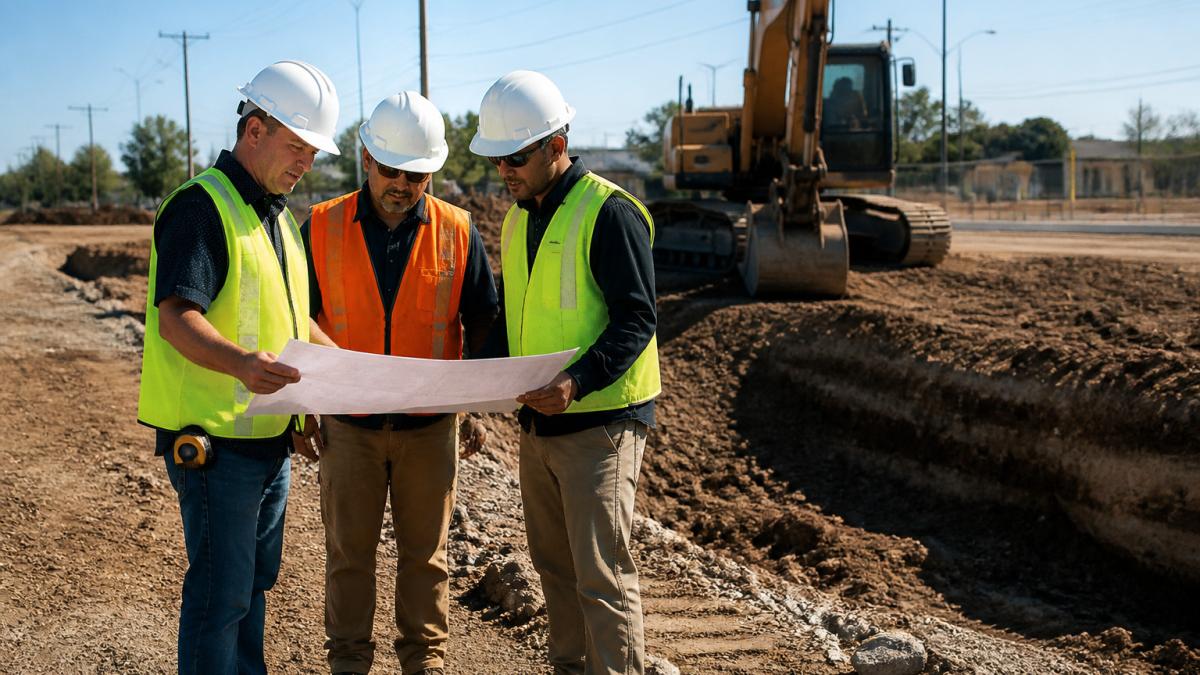
Infrastructure construction builds the systems that move people, water and power: roads, bridges, drainage, utilities and the sites beneath them. Choosing the right contractor starts with knowing that scope. A firm that frames houses well may not be suited to a municipal roadway, so the difference matters before you compare a single bid.
Many owners treat every project as a generic “construction” job. That shortcut tends to produce mismatched bids. A general building contractor manages vertical work such as walls, roofs and interiors. An infrastructure contractor works horizontally and below grade, handling grading, paving, excavation and drainage. Some firms do both, but most specialize.
We see this distinction clearly in West Texas, where soils shift with moisture and heavy traffic loads are common. A parking lot and a city street both need subgrade preparation, but they are engineered differently and bid differently. When you read a contractor’s services page, look for specific language about pavement, excavation, grading and drainage rather than broad claims about “building services.”
Ask which services the firm performs and who will be on your site.
Construction Contractor Qualifications to Verify Before You Shortlist
Before comparing prices, confirm that each contractor can legally and financially perform the work. Qualifications are the filter that removes firms that cannot finish the job, regardless of how competitive their quote looks.
Licensing, Bonding and Insurance
Ask which licenses, insurance, and bonds apply to your project, and confirm the relevant requirements with the appropriate source.
Prequalification Lists and Public Agency Records
For public projects, check the relevant agency’s official resources for contractor qualification information and past awards.
Watch out: a contractor who cannot produce references for projects of similar size should move down your list, however polished the brochure.
Site Preparation and Excavation: What the Scope Should Include
Site preparation is an important part of a pavement or structure project, so the scope should be explicit.
Review the site preparation scope and compare bids line by line. Ask what work and testing each bid includes.
Pricing for site work depends on soil conditions, access, material quantities and schedule, so request an itemized quote rather than a lump sum. Ask how the contract addresses unforeseen subsurface conditions before work begins.
Matching Project Scale, Capacity and Delivery Method
Not every capable contractor fits every project. Scale and delivery method affect both cost and risk.
Ask whether the firm can support your timeline. Confirm how supervision and change orders will be handled.
Delivery method matters as well. Know which model your project uses before you compare proposals.
Ask whether the bid includes all applicable fees.
Service Area and Geographic Coverage Across West Texas
Geography can be a consideration when assessing a contractor’s familiarity with local conditions.
Check where each company operates and ask about its experience with projects in your area.
Zahn Paving is a fourth-generation, family-owned business providing asphalt paving, concrete work, and excavation services to residential, commercial, and municipal clients in Lubbock.
Comparing Commercial Asphalt Paving and Construction Bids
Commercial asphalt paving bids can be compared by reviewing their scope, not just the total figure.
Compare the scope, quantities, schedule, and any exclusions in each bid. For an overview of what a firm offers, see commercial paving services.
Pricing for commercial paving depends on quantities, dates and delivery, so avoid relying on any single online estimate. Request written quotes and ask each firm to explain the largest cost drivers in its proposal. Our guide to requesting an excavation quote in Lubbock explains how to get a reliable quote and avoid low-ball bids.
Compare each bid’s scope and qualifications alongside its price.
Your Next Step: Requesting Bids and Checking Qualifications With Zahn Paving
Once you have narrowed your list, request bids using the same project scope and ask about relevant project experience. You can review the new construction installation service you would be hiring for before you request bids.
Zahn Paving provides asphalt paving, concrete work, and excavation services to residential, commercial, and municipal clients in Lubbock. For more information, see our guide to ranch road construction in West Texas.
Contact Zahn Paving to request a free estimate and compare the scope, qualifications and schedule side by side.
Frequently Asked Questions
What does an infrastructure construction company do?
Infrastructure construction can include public and commercial systems such as roads, parking lots, drainage, utilities and underground works. When comparing firms, check whether their services match your project type.
What is the difference between infrastructure construction and general construction?
General construction typically refers to building structures such as offices, warehouses or homes, with work centered on framing, finishing and building systems. Infrastructure construction focuses on site-level and civil work outside the building footprint, including paving, grading and underground systems. Some contractors do both, but you should confirm their recent project history in the specific category you need before shortlisting them.
How do you choose a construction contractor for an infrastructure project?
Start by comparing recent projects of similar scale and type. Request bids that describe the scope and schedule so you can compare them on the same basis rather than on price alone.
What should a construction contract include?
A clear construction contract should define the scope of work, materials, schedule and change order procedures. Ask Zahn Paving for current pricing and contract terms directly, since pricing depends on quantity, schedule and site conditions.
7 Asphalt Driveway Installation Review Checks That Matter
Last Updated: October 26, 2026
Quick Summary
An asphalt driveway installation review is most useful when it names specific details you can verify, such as base compaction, lift thickness, slope, and edge support, rather than star ratings alone. Reviews written 12 to 24 months after completion reveal far more about an asphalt driveway than glowing reviews posted right after the job.
- Base aggregate is typically placed in lifts of about 4 to 6 inches and compacted between lifts.
- Residential driveways typically need a compacted asphalt layer of about 2 to 3 inches over a prepared base.
- A common drainage target is a slope of roughly 1 to 2 percent away from the garage or foundation.
- Watch for a burst of five-star reviews in one week followed by months of silence.
- Ask whether quoted asphalt thickness is compacted thickness or loose depth, since they differ.
Table of Contents
- What an Asphalt Driveway Installation Review Actually Tells You
- How to Read Asphalt Paving Contractor Reviews Without Getting Fooled
- The Asphalt Driveway Installation Process, Step by Step
- Asphalt Driveway Thickness: The Spec Most Reviews Never Mention
- Asphalt Driveway Cost: What a Quote Should Break Down
- A Contractor-Vetting Checklist You Can Bring to the Estimate
- Long-Term Performance: What Reviews Look Like After Five Years
- Get a Free Estimate From Zahn Paving
- Frequently Asked Questions
What an Asphalt Driveway Installation Review Actually Tells You
An asphalt driveway installation review is only as useful as the specific details it contains. Most reviews tell you whether someone liked their contractor.
That distinction matters more than most homeowners realize. At Zahn Paving, we’ve watched customers make hiring decisions based on star ratings alone, then call us later to fix what a five-star crew left behind. A review is evidence, not a verdict.
The Difference Between a Good Review and a Useful One
A good review makes you feel confident. A useful review tells you what to check.
“Great crew, driveway looks amazing” is a good review.
When you read a review, ask what it would let you verify at your own estimate. If the answer is nothing, keep scrolling.
Federal Trade Commission guidance on consumer reviews is worth a look if you want to understand how platforms are supposed to handle fake or incentivized reviews.
How to Read Asphalt Paving Contractor Reviews Without Getting Fooled
Asphalt paving contractor reviews cluster around a few predictable themes: crew courtesy, cleanup, price surprises, and how the surface looks a year later. Read for those themes, not for the star average.
Here’s what a common mistake looks like: a homeowner sorts by “most recent” and reads the top five glowing reviews. Those five are often the ones a company asked for right after completion, before any settling or cracking showed up. The reviews that tell you the most are the ones written 12 to 24 months later.
Red Flags in Review Patterns
Watch for these patterns rather than any single review:
- A burst of five-star reviews in one week, then silence for months
- Reviews that praise “professionalism” but never mention the finished driveway
- Complaints answered with excuses about weather or “customer expectations”
One negative review about a crumbling driveway edge after two years tells you more than twenty reviews saying “great job.”
If you want a deeper guide on vetting and choosing asphalt paving contractors before you start calling, read our full contractor selection guide.
The Asphalt Driveway Installation Process, Step by Step
Driveway installation follows a fixed sequence, and a review that skips the early steps is describing a surface, not a job. For the full local guide to asphalt paving in Lubbock, TX, keep this process in context as you read.
- Site evaluation and measurement. The contractor checks slope, existing drainage, soil conditions, and access for equipment. Ask whether they probed the subgrade for soft spots; a crew that only measures square footage is guessing at base depth.
- Excavation. Old material and unsuitable soil come out to the required depth. The key number is excavation depth relative to finished grade, if the crew removes too little, the base and asphalt layers get squeezed and the driveway sits too high against the garage apron.
- Base preparation. Crushed stone goes down in layers and gets compacted. This is the step most likely to be rushed. Base aggregate is typically placed in lifts of about 4 to 6 inches and compacted between lifts, not dumped in one deep pile and rolled once.
- Grading for drainage. The base is shaped so water runs away from structures. A common target is a slope of roughly 1 to 2 percent away from the garage or foundation, enough to move water without making the driveway uncomfortable to walk or park on.
- Asphalt laydown. Hot mix is spread and screeded to uniform thickness. Mix temperature matters: asphalt that arrives too cool or sits too long before laydown compacts poorly and stays porous.
- Compaction. A roller compacts the mat while it’s still workable. Compaction is measured as a percentage of maximum density, and a crew that rolls only the center and skips the edges leaves the most vulnerable zones under-compacted.
- Edge finishing and cleanup. Edges are shaped and supported, and the site is cleared. Unsupported edges are where crumbling and raveling usually start.

Grading, Drainage, and Base Preparation
This is where driveways fail. A crew can lay a beautiful black surface over a bad base and it will look perfect for one season.
Proper grading sends water off the driveway and away from the garage, foundation, and yard. Base preparation means compacted stone at the right depth, not a thin layer of gravel over whatever was already there.
When you read a review, look for evidence of these checkpoints, lift thickness, compaction, slope, edge support, rather than adjectives about how the finished surface looked on day one. A review that names a checkpoint is worth ten that only name a star rating.
For a closer look at how site grading and drainage work together, see our drainage and grading guide.
Asphalt Driveway Thickness: The Spec Most Reviews Never Mention
Asphalt driveway thickness is the single specification that predicts how long a driveway lasts, and almost no reviews mention it.
Ask your contractor what thickness they’re installing and whether it’s compacted thickness or loose depth. Those are different numbers, and the difference matters.
A crew that quotes thickness without being asked is a crew that thinks about it. A crew that gets vague is telling you something too.
Asphalt Driveway Cost: What a Quote Should Break Down
An asphalt driveway cost estimate should separate the work into line items you can compare, not hand you one lump number. Ask for a written breakdown covering:
| Quote Line Item | What It Should Tell You |
|---|---|
| Excavation and removal | Depth of removal, haul-away included or not |
| Base material | Type of stone, depth, compaction method |
| Asphalt thickness | Compacted depth, mix type |
| Grading and drainage | Slope plan, any drainage corrections |
| Labor | Crew size, estimated days on site |
| Cleanup and warranty | What’s covered and for how long |
Cost per square foot varies with access, base condition, and thickness, so treat any single number with suspicion. For a detailed breakdown of what drives pricing, see our asphalt driveway cost guide.
Watch out: a quote that’s dramatically lower than the others usually means thinner asphalt, less base, or skipped excavation. That’s not a bargain, it’s a future replacement.
A Contractor-Vetting Checklist You Can Bring to the Estimate
Bring this checklist to every estimate and write down the answers. A contractor who can’t answer these clearly is telling you how the job will go.
- How deep will you excavate, and what happens to the old material?
- What base material and depth are you using, and how is it compacted?
- What is the compacted asphalt thickness?
That last question matters. “Hidden problems” discovered mid-job are a common complaint. A contractor who walks the site carefully before quoting should be able to predict most of what they’ll find.
Long-Term Performance: What Reviews Look Like After Five Years
Reviews written after five years read differently. They mention how the driveway handled freeze-thaw cycles, whether edges crumbled, and whether the surface still drains. They mention whether the contractor came back when something went wrong.
Long-term performance comes down to three things: base preparation, thickness, and maintenance. But “maintenance” is where most homeowners and most reviews go vague. Here is a practical framework for judging durability evidence instead of just durability claims.
What Durable Asphalt Actually Looks Like at Five Years
A driveway that was built well and maintained shows a predictable pattern. Use these markers when you read a long-term review or inspect a driveway yourself:
- Surface texture. The mat should still be tight and uniform. Widespread raveling, loose aggregate at the surface, points to a thin mat, cool mix, or under-compaction.
- Edges. Edges should be intact and supported. Crumbling edges usually mean the base wasn’t extended under the edge or the edge wasn’t compacted.
- Drainage. Water should still sheet off. New puddles or soft spots that appear after a few seasons often signal base settlement rather than a surface problem.
A review that describes any of these markers specifically is far more useful than one that says the driveway “still looks great.”
Maintenance Intervals and What They Cost You
Sealcoating is the maintenance step most homeowners skip, and skipping it shortens the surface life.
Beyond sealcoating, the maintenance that matters is small and cheap if done early: crack filling before water gets under the mat, and edge repair before a crumbling edge spreads.
A long-term review that praises the surface but never mentions sealcoating, crack filling, or follow-up visits may be describing a driveway that simply hasn’t been stressed yet. Ask how the owner maintained it before you treat the review as proof of workmanship.
Learn what sealcoating involves before you assume your new driveway doesn’t need it.
A driveway that’s still solid after five years is the only review that counts, but only if you know what “solid” is supposed to look like and what it took to keep it that way.
Get a Free Estimate From Zahn Paving
Reading reviews is a start. Seeing a driveway that’s held up for years is better.
Zahn Paving is a fourth-generation, family-owned business with over 75 years of experience serving residential, commercial, and municipal clients. We build on proper site preparation, grading, and drainage, and we back our excavation and pavement maintenance work with a solid warranty.
Get started with Zahn Paving and get a driveway built to last through Texas summers.
Frequently Asked Questions
What should I look for in asphalt driveway installation reviews?
Look for reviews that describe specifics: the asphalt driveway thickness used, how the contractor handled drainage, how long the driveway has held up, and whether the crew cleaned up. Reviews that mention a project outcome after two or more years carry more weight than a five-star rating posted the day the crew left. Also check for consistent complaints across multiple reviews, especially about cracking, divots, or poor communication, since those point to workmanship or process problems rather than one bad day.
Is 2 inches of asphalt enough for a driveway?
Two inches is generally the compacted surface course, but it should sit on a properly graded and compacted aggregate base, not directly on soil. A driveway built with 2 inches of asphalt over a thin or poorly compacted base will crack and rut faster, especially under heavy vehicles and hot summers. Ask your contractor what base depth they plan and what compacted asphalt thickness they are quoting, and get both numbers in writing before work starts.
How long does asphalt driveway installation take?
Most residential driveways are paved in one to two days once site preparation is finished. Excavation, grading, and base compaction can add another day or more depending on the existing surface and drainage. New asphalt needs time to cure before regular traffic; many contractors ask you to keep vehicles off for several days and heavier vehicles off longer. Ask for a written schedule that separates prep, paving, and cure time so you can plan around it.
How can I tell whether an asphalt driveway contractor is reliable?
Check for a physical local address, a current license and insurance certificate, and a BBB rating you can verify yourself rather than take on faith. Ask for references from driveways at least three years old and call them. A reliable paving contractor will put the asphalt driveway thickness, base depth, drainage plan, and warranty terms in the written estimate. Be wary of anyone who quotes a price without measuring the site or who pressures you to sign the same day.
Is a Concrete Driveway Worth the Installation Cost?
Last Updated: October 25, 2026
Quick Summary
A concrete driveway is worth the installation cost when the slab is built right: 4 to 6 inches thick over a compacted base, with correct reinforcement, joints, and drainage. Concrete costs more up front than asphalt but lasts longer with minimal maintenance, and prep decides how long it survives.
- For a standard residential driveway carrying cars and light trucks, 4 inches is the common minimum thickness.
- Residential driveways are typically specified at 4,000 psi compressive strength, with 3,500 psi as a common floor.
- A compacted granular base of 4 to 6 inches is typical, compacted to at least 95% of maximum dry density.
- Stay off a new slab for about 7 days before light vehicles; it reaches most design strength at 28 days.
- DIY rarely works for a driveway, since a typical crew is 4 to 6 people and ready-mix sets in 60 to 90 minutes.
Table of Contents
- What Concrete Driveway Installation Actually Involves
- Concrete Driveway Cost: What Drives the Price Up or Down
- Concrete Driveway Thickness: The Spec That Decides How Long It Lasts
- Concrete Driveway Curing Time: When You Can Drive On It
- Concrete vs Asphalt Driveway: Which Fits Your Site and Budget
- DIY Pour or Hire a Pro? What the Job Really Requires
- Get a Free Estimate Before You Commit
- Frequently Asked Questions
What Concrete Driveway Installation Actually Involves
Concrete driveway installation is the process of removing old pavement, preparing a compacted base, setting forms, placing reinforcement, and pouring a concrete slab that will carry vehicles for decades.

A driveway job breaks into two phases: what happens under the slab, and what happens on top of it. Skip either one and you get cracks, settling, or standing water within a few seasons.
Tear-Out, Excavation, and Subgrade Preparation
Tear-out is the demolition and removal of the old driveway, and it sets the depth for everything else.
Here in Lubbock, that step matters more than in most places. You can read more about how we handle that in our guide to stabilizing expansive clay soil for construction.
Watch out: a contractor who skips subgrade compaction to save a day is handing you a slab that will crack from below, and no surface finish will hide it.
Formwork, Reinforcement, and the Pour
Formwork is the wooden or metal edging that holds the wet concrete in place and sets your driveway dimensions.
Inside the forms, we place reinforcement: rebar or wire mesh. This holds the slab together when the clay shifts and when Texas heat makes the concrete expand.
Finishing is where curb appeal gets decided. If you want to see what works in our climate, our guide to choosing the right concrete finishes walks through the options.
Concrete Driveway Cost: What Drives the Price Up or Down
Concrete driveway cost depends on four things: size, thickness, site conditions, and how much prep the job needs. A flat, easy site costs less per square foot than a sloped one with old pavement to haul off.
Here is what moves the number:
- Square footage. More slab means more concrete, more labor, and more finishing time.
- Tear-out and hauling. Removing an old driveway adds demolition and disposal.
- Soil conditions. Expansive clay may need extra excavation and stabilization.
- Thickness. A thicker slab uses more concrete and more reinforcement.
- Access and slope. Tight lots and steep grades slow the crew down.
- Finishing choice. A broom finish is standard; stamped or exposed finishes take longer.
We do not publish flat prices, because a quote built on assumptions is how homeowners get burned. For a full breakdown of what local projects actually run, read our concrete driveway cost guide for Lubbock.
Concrete Driveway Thickness: The Spec That Decides How Long It Lasts
Concrete driveway thickness is the single measurement that predicts how long a slab survives, but thickness alone does not tell the whole story. A 4-inch slab over a properly compacted base with correctly spaced joints will outlast a 6-inch slab poured over loose fill. The specs below are the ones worth asking about before you sign a contract.
Thickness by load
For a standard residential driveway carrying cars and light trucks, 4 inches is the common minimum (How Thick Should a Concrete Driveway Be?). Bump to 5 inches for heavier pickups and SUVs used daily, and 6 inches if you park an RV, a boat, or a commercial truck. Thickness is not just about weight, a thicker slab resists cracking better when the soil beneath it moves, and it handles the freeze-thaw swings that hit West Texas in winter.
A common mistake is measuring thickness at the edge only. The slab needs to be consistent across the whole pour, and that takes forms set correctly and a crew that checks depth as they spread.
Concrete strength
Residential driveways are typically specified at 4,000 psi compressive strength, with 3,500 psi as a common floor and 4,500 psi or higher for heavy loads or harsh freeze-thaw exposure. Ask for the mix design in writing. A crew that cannot tell you the psi is a crew that is guessing.
Base depth and compaction
Under the slab, a compacted granular base of 4 to 6 inches is typical for residential driveways, placed in lifts and compacted to at least 95% of maximum dry density. On expansive clay, the base and subgrade preparation matter more than the concrete itself, see our guide to stabilizing expansive clay soil for construction. Thickness means nothing over loose soil.
Reinforcement
Rebar or wire mesh holds the slab together when the clay shifts and when heat makes the concrete expand. Common practice is #3 or #4 rebar on a grid, or welded wire mesh, placed in the middle third of the slab, not lying on the ground and not pushed to the surface. Reinforcement placed at the wrong height does little good.
Control joints and spacing
Control joints are saw-cut lines that give the concrete a planned place to crack. A common rule is to space joints at 2 to 3 times the slab thickness in feet, so roughly 8 to 12 feet apart on a 4-inch slab, and to cut them within 6 to 12 hours of finishing, before the concrete shrinks enough to crack on its own.
Drainage slope
A driveway should slope away from the house and toward the street or a drainage point at roughly 1/8 to 1/4 inch per foot, enough to move water without feeling steep underfoot. A flat pour or a slope toward the foundation is a recipe for standing water and a wet basement or slab edge.
When you compare quotes, ask each contractor for the psi, base depth, rebar size and spacing, joint spacing, and slope. A quote that lists only a price per square foot is a quote that will grow once the crew hits your soil.
None of these numbers is a substitute for a site-specific design, soil, climate, and load all shift the target, but they give you a way to compare bids on something other than price.
Concrete Driveway Curing Time: When You Can Drive On It
Concrete driveway curing time is the wait before the slab can handle weight, and most crews tell you to stay off it for about 7 days. That is the short answer. The longer answer is that concrete keeps gaining strength for weeks.
Here is the practical timeline we give homeowners:
- 24 hours: You can walk on it carefully.
- 7 days: Light vehicles are usually fine.
- 28 days: The slab reaches most of its design strength.
Curing is not passive. Hot, dry, windy days pull moisture out of fresh concrete too fast, which causes surface cracking. Crews manage this by covering the slab or misting it. In Texas summer heat, that step is not optional.
Concrete vs Asphalt Driveway: Which Fits Your Site and Budget
Concrete vs asphalt driveway decisions come down to lifespan, upkeep, and how the surface handles heat. Concrete costs more up front and lasts longer with less maintenance.
| Factor | Concrete | Asphalt |
|---|---|---|
| Upfront cost | Higher | Lower |
| Lifespan | Longer | Shorter |
| Maintenance | Minimal | Regular sealing |
| Heat performance | Stays rigid in heat | Softens in extreme heat |
| Surface | Light gray, smooth | Black, smooth |
| Best for | Long-term value | Tight budgets |
Concrete holds up better under Texas sun and does not soften the way asphalt can. Asphalt wins if the budget is tight or the site needs a fast turnaround.
If you are weighing a DIY pour against hiring out, our breakdown of concrete contractor versus DIY pros and cons covers the real trade-offs.
DIY Pour or Hire a Pro? What the Job Really Requires
A DIY concrete pour looks simple in a video: mix, dump, smooth. In practice, it needs equipment most homeowners do not own, skills that take years to build, and a tolerance for risk that most people underestimate. The honest answer is that DIY can work for small, low-stakes slabs, a shed pad, a walkway, and rarely works for a driveway.
What the job actually requires
- Demolition tools. Breaking and hauling an old slab is heavy work, a jackhammer, a dumpster, and hours of labor.
- Excavation and compaction. You need a skid-steer and a plate compactor, not a shovel.
- Forms set to grade. A wrong slope sends water toward your foundation.
- Reinforcement placement. Rebar or mesh must sit at the right height in the slab.
- A fast, coordinated pour. Concrete sets on its own schedule, not yours.
- Finishing and joint cutting. Broom texture and control joints need timing and practice.
The decision framework
Crew size. A driveway pour is a multi-person job.
Skill. Screeding to grade, floating, brooming, and cutting joints on time are learned skills.
Risk. A failed slab is expensive to undo. Tear-out costs as much the second time, and you pay for the first pour twice.
Likely savings. DIY saves the labor portion of the bid, but the material, equipment rental, and disposal costs do not disappear.
DIY makes sense for small slabs where a mistake is cosmetic. For a driveway, where the slab carries vehicles, ties into the house grade, and is expensive to replace, the math usually favors a professional crew.
If you are weighing a DIY pour against hiring out, our breakdown of concrete contractor versus DIY pros and cons covers the real trade-offs.
Get a Free Estimate Before You Commit
The last step is the one that protects your money: get a written estimate that spells out thickness, base prep, reinforcement, and finishing. A quote that lists only a price per square foot is a quote that will grow once the crew hits your soil.
At Zahn Paving, we are a fourth-generation, family-owned business with more than 75 years of experience in West Texas conditions. You can see our concrete paving services and request pricing for your project.
Frequently Asked Questions
How deep does a concrete driveway need to be?
Most residential concrete driveways are poured 4 inches thick, which handles cars and light trucks. Bump that to 5 to 6 inches if you park heavy trucks, an RV, or regularly have delivery vehicles on the slab. Thickness only works if the base under it is right, so the gravel layer should be compacted in lifts and the subgrade graded for drainage. Ask your contractor what thickness they are quoting and why.
How soon can you drive on a new concrete driveway?
Plan on staying off the slab for at least 7 days before driving a standard passenger car on it, and give it 28 days for full design strength. Concrete driveway curing time depends on weather: hot, dry, windy days pull moisture out fast, so contractors often use curing compound or plastic sheeting to slow evaporation. Keep heavy trucks off for the full 28 days, and avoid parking in the same spot repeatedly during the first month.
Is a concrete or asphalt driveway better for hot climates?
Concrete holds up well to heat and sun, resists rutting, and typically lasts 30 years or more with basic care. Asphalt costs less upfront and is easier to patch, but it softens in extreme heat and needs sealcoating every few years. In a place with long, hot summers, concrete’s resistance to deformation and its lighter color (which reflects heat) are real advantages. Compare concrete vs asphalt driveway quotes side by side, including maintenance costs over 20 years.
What should you compare when choosing a concrete driveway contractor?
Ask for the mix design, slab thickness, rebar or wire mesh spec, joint spacing, and the base preparation plan in writing. Request addresses of driveways they poured 5 or more years ago so you can inspect how they held up. Confirm licensing and insurance, and get the warranty terms in writing. A low concrete driveway cost bid that skips base prep or reinforcement usually costs more later.
A driveway that cracks in year two usually fails because of what happened under the slab, not on top of it. If you want a pour built for Lubbock clay and Texas heat, get a free estimate from Zahn Paving and start with a site assessment that tells you the truth about your soil, your slope, and your options.
How to Choose Asphalt Paving Contractors
Table of Contents
- What to Look for in Asphalt Paving Contractors
- Understanding Asphalt Paving Estimates
- Asphalt Paving Cost Factors and Budget Planning
- Asphalt Resurfacing vs Replacement: When to Choose Each
- The Asphalt Paving Process and What to Expect
- Warranty, Maintenance, and Long-Term Performance
- Frequently Asked Questions
Last Updated: October 21, 2026
What to Look for in Asphalt Paving Contractors
Choosing the right asphalt paving contractors can mean the difference between a driveway that lasts decades and one that cracks within a year. The decision goes beyond price, it’s about finding a contractor who understands your specific needs, has the expertise to handle your project properly, and stands behind their work with real guarantees.
At Zahn Paving, we’ve spent over 75 years learning what separates reliable asphalt paving contractors from those who cut corners. The foundation of any quality paving project rests on three critical factors: proper credentials, local expertise, and transparent communication about what your project actually requires.
Licensing, Insurance, and Bonding Verification
Before you sign anything, verify that your asphalt paving contractors hold the proper licenses required in your state. A licensed contractor has passed inspections and maintains compliance with industry standards. This is non-negotiable.
Insurance protects you if something goes wrong during the project. Ask for proof of general liability insurance and workers’ compensation coverage.
Bonding is equally important. A performance bond means the contractor has posted a financial guarantee that they’ll complete the job as promised. If they abandon the project or fail to meet specifications, the bonding company covers the cost to finish the work correctly.
Many property owners skip this verification step because it feels bureaucratic. Don’t. Checking these credentials takes 15 minutes and protects you from thousands in potential liability.
Experience with Local Climate and Traffic Conditions
Not all asphalt paving contractors understand how to build surfaces that withstand Texas heat and heavy traffic. This is where local expertise matters enormously.
Asphalt expands and contracts with temperature swings. In summer, surface temperatures can exceed 160 degrees Fahrenheit. In winter, freeze-thaw cycles stress the pavement. A contractor unfamiliar with these cycles might use the wrong asphalt mix or skip critical drainage preparation, leading to premature cracking.
Traffic load is another consideration. A residential driveway experiences different stress than a commercial parking lot with daily truck traffic. Experienced asphalt paving contractors adjust their base layer thickness, compaction standards, and material specifications based on expected use. Ask potential contractors how they would adjust their approach for your specific traffic patterns and climate conditions.
Understanding Asphalt Paving Estimates
A proper estimate does more than give you a price. It tells you whether the contractor has actually assessed your project or is just plugging numbers into a template.
What a Complete Estimate Should Include
Your estimate should document the scope clearly: square footage, base preparation work, asphalt thickness, any repairs needed, and timeline. It should specify the asphalt mix type being used, not all mixes are the same.
A thorough estimate from quality asphalt paving contractors includes site preparation details. This is where most problems originate. Poor drainage, inadequate base compaction, or unstable soil causes premature failure. A contractor who glosses over these details isn’t thinking long-term.
The estimate should also address existing conditions. If your current surface has drainage issues or soft spots, the estimate should explain how these will be addressed. Vague language like “site preparation as needed” leaves room for surprise charges later.
Timeline matters too. How many days will the work take? What’s the cure time before you can drive on the surface? Quality asphalt paving contractors provide realistic schedules that account for weather and proper curing.
Red Flags in Contractor Quotes
If a quote seems unusually low compared to others, ask why. Sometimes it’s because the contractor is cutting corners on materials, skipping proper base preparation, or using lower-grade asphalt mix. Cheap upfront often means expensive repairs later.
Watch for vague language. “Surface preparation” without specifics is a red flag. “As needed” repairs suggest the contractor hasn’t done a thorough site assessment. Professional asphalt paving contractors provide itemized details, not generalizations.
Estimates that include undefined contingency fees are problematic. A contractor should explain what contingencies might apply and provide a reasonable range, not a blank check for “unforeseen conditions.”
Also be cautious if a contractor pressures you to decide immediately or offers a discount for paying cash upfront. Reputable asphalt paving contractors have consistent pricing and reasonable timelines for decisions.
Asphalt Paving Cost Factors and Budget Planning
Understanding what drives pricing helps you evaluate estimates intelligently and avoid overpaying for unnecessary work.
What Drives Project Pricing
Square footage is the starting point, but it’s not the whole story. A 500-square-foot residential driveway costs less per square foot than a 5,000-square-foot parking lot, because larger projects achieve better efficiency with equipment and labor.
Base preparation is a major cost factor. If your existing surface is intact and properly draining, prep work is minimal. If you have poor drainage, soft soil, or an unstable base, that work adds significantly to the project cost.
Material quality affects pricing. Higher-grade asphalt mixes designed for heavy traffic or extreme climate conditions cost more than standard mixes. For a commercial parking lot or high-traffic driveway, the investment in better materials typically pays for itself through longevity.
Timing influences cost as well. Projects scheduled during peak season (spring and summer) may cost more than off-season work. Weather also matters, if conditions require special scheduling or additional curing time, costs adjust accordingly.
Getting Transparent Pricing Information
Ask asphalt paving contractors to break down their estimate by line item. How much for site prep? How much for base layer? How much for asphalt installation? This transparency lets you understand where your money goes and compare quotes meaningfully.
Request the specific asphalt mix being proposed. Ask what PSI (pounds per square inch) compaction standard they’re using. These specifications directly affect durability and should be documented in writing.
Don’t accept estimates that lump everything into one vague price. Professional asphalt paving contractors itemize their work because they’re confident in their pricing and want you to understand the value.
Asphalt Resurfacing vs Replacement: When to Choose Each
Sometimes your existing asphalt can be salvaged. Other times, replacement is the only sensible choice. Understanding the difference saves money and prevents future problems.
How Contractors Assess Which Option Fits Your Pavement
Resurfacing (overlay) works when your base layer is still stable and you’re primarily addressing surface wear. The contractor mills off the top 1.5 to 2 inches of worn asphalt and applies a new layer.
But resurfacing only works if the base is sound. If your pavement is severely cracked, has alligator cracking patterns, or shows signs of base failure, resurfacing is temporary. The new layer will fail if it’s applied over an unstable foundation.
Full replacement removes the entire existing asphalt layer and often rebuilds the base. This is necessary when drainage problems, soil settlement, or structural damage has compromised the foundation. It’s more expensive upfront but provides a fresh start with a properly engineered base.
Quality asphalt paving contractors assess your specific situation and recommend the approach that will actually solve your problem long-term, not just what generates the highest immediate revenue.
The Asphalt Paving Process and What to Expect
Understanding the workflow helps you monitor progress and recognize quality workmanship.

Site Preparation, Grading, and Drainage
Before any asphalt goes down, the site must be properly prepared. This includes removing debris, addressing drainage issues, and ensuring the base is compacted to specification. Poor preparation is the root cause of most premature pavement failures.
Grading establishes proper slope for water drainage. Water that pools on your surface will infiltrate the base, weaken it, and cause cracking. Experienced asphalt paving contractors ensure water sheds away from the surface at a minimum 2% slope.
Base layer installation is critical. The base, typically crushed stone or recycled asphalt, must be compacted to 95% density minimum. This foundation supports the asphalt above and distributes traffic loads evenly. Skipping proper base compaction is a common shortcut that leads to failure.
Installation Timeline and Workmanship Standards
Once the base is ready, asphalt is laid and compacted while hot. Temperature control matters, the asphalt must be at the correct temperature when placed and compacted, or it won’t bond properly. The crew should work methodically, maintaining consistent thickness and compaction across the entire surface.
Proper compaction requires multiple passes with heavy equipment. The surface should be smooth with no soft spots or low areas. Quality asphalt paving contractors use straightedges and laser levels to verify surface flatness.
Curing time is essential. Most asphalt needs 24-48 hours before vehicle traffic, though full strength develops over weeks. A contractor who lets you drive on the surface too early risks premature failure.
Warranty, Maintenance, and Long-Term Performance
Your warranty is only as good as the contractor’s ability to stand behind it. Understand what’s covered and for how long.
A solid warranty on asphalt paving should specify what constitutes a failure (cracking beyond certain width, settlement, base failure) and what’s excluded (normal wear, accident damage, lack of maintenance).
Long-term performance depends on maintenance. Seal coating every 2-3 years protects the asphalt from oxidation and water infiltration. Filling cracks promptly prevents them from expanding. Regular maintenance extends pavement life significantly.
Ask potential contractors what maintenance schedule they recommend for your specific project. According to the American Society of Civil Engineers infrastructure guidelines, proactive maintenance extends asphalt life by 5-10 years compared to reactive repairs.
A contractor who discusses long-term performance and maintenance is thinking about your satisfaction beyond the initial installation. That’s the mark of a business committed to quality.
Choosing asphalt paving contractors requires evaluating credentials, experience, transparency, and commitment to quality. Verify licensing and insurance, confirm local expertise, scrutinize estimates for completeness, and understand what drives pricing.
At Zahn Paving, we bring four generations of family expertise to every project. We stand behind our work with solid warranties and recommend maintenance schedules that protect your investment. The Asphalt Pavement Association confirms that proper installation and maintenance are the foundation of long-lasting surfaces.
| Evaluation Criteria | What to Look For | Why It Matters |
|---|---|---|
| Licensing & Insurance | Current state license, general liability, workers’ comp, performance bond | Protects you from liability and ensures contractor accountability |
| Local Experience | Proven work in Texas climate, understanding of drainage and traffic loads | Prevents premature failure from weather and use patterns |
| Estimate Transparency | Itemized breakdown of site prep, base, asphalt, timeline, materials | Prevents surprise charges and lets you compare quotes fairly |
| Resurfacing vs Replacement Assessment | Honest evaluation of base condition and what actually solves your problem | Ensures money spent addresses the real issue, not a quick fix |
| Warranty & Maintenance Guidance | Clear warranty terms and recommendations for ongoing care | Extends pavement life and clarifies what’s covered if problems arise |
Frequently Asked Questions
What should I compare when choosing an asphalt paving contractor?
Prioritize licensing, insurance, and bonding verification first. Then evaluate their experience with local weather and soil conditions, customer reviews and ratings, warranty offerings, and the completeness of their written estimates. Ask for references from recent projects and verify they use quality asphalt mix and proper installation standards. A reliable contractor should explain their process transparently and address drainage and site preparation thoroughly.
How can I tell whether an asphalt paving estimate is complete?
A complete asphalt paving estimate should itemize site preparation, grading, base layer installation, asphalt mix specifications, labor, equipment, timeline, warranty terms, and any surface treatment like sealcoating. It should address drainage solutions and specify the thickness of each layer. Beware of vague estimates with single-line pricing or contractors who avoid discussing subsurface preparation. Request the estimate in writing and ask for clarification on any line items you don’t understand.
What is the best time of year to lay asphalt?
Asphalt installation works best in warm, dry conditions when temperatures stay above 50°F during and after installation. Spring and early fall typically offer ideal conditions. Summer can work but requires careful timing to avoid extreme heat affecting the asphalt mix. Winter installation is not recommended in most climates. A qualified paving contractor can advise on the optimal window for your specific project based on local weather patterns and your pavement’s needs.
Should I choose asphalt resurfacing or full replacement for my driveway?
Resurfacing works when the base layer is still sound but the top surface shows wear, cracking, or fading. Full replacement is necessary if the base has failed, causing pooling water, severe cracking, or structural instability. A professional contractor should inspect your pavement to assess base integrity and drainage. Resurfacing costs less upfront but may only extend life if the foundation is compromised. Replacement provides durability when done correctly with proper grading and drainage.
Asphalt Driveway Repair Near Me: What to Expect
Table of Contents
- How to Find Reliable Asphalt Driveway Repair Near Me
- Choosing a Local Paving Contractor: Vetting Checklist
- Asphalt Driveway Repair Cost: What Goes Into Your Estimate
- Matching the Repair Method to the Damage
- Asphalt Repair Curing Time and Durability Timelines
- Residential and Commercial Paving Services: What to Ask For
- Frequently Asked Questions
Last Updated: October 17, 2026
How to Find Reliable Asphalt Driveway Repair Near Me
Searching for asphalt driveway repair near me usually returns a long list of names with no way to tell them apart.
Asphalt driveway repair is the process of restoring a damaged asphalt surface, from sealing hairline cracks to milling out and replacing failed sections, so the pavement drains properly and holds up under traffic.
Below, we break down what to check before you call, how to vet a contractor, what drives an estimate, and which repair method fits which damage.
The most common mistake is hiring on price alone. A low bid that skips base repair or drainage work often means a second, larger bill a year later. Ask what is included in writing before anyone touches the driveway.
What to Check Before You Call
Before you dial anyone, walk the driveway and write down what you see. Note the size and number of cracks, any sunken or heaved areas, puddles after rain, and where the damage sits.
Then gather three things from every provider:
- Proof of insurance, including general liability, so you are not exposed if something goes wrong on your property.
- A written scope, listing prep work, materials, and cleanup, not just a lump-sum figure.
- References for similar jobs, ideally driveways of your size and surface type.
Ask how long they have worked in the area and whether they handle both residential and commercial paving. A provider set up for full-service work is more likely to diagnose the cause rather than just cover the symptom.
Choosing a Local Paving Contractor: Vetting Checklist
Vetting a paving contractor comes down to paperwork, proof, and process. Run every candidate through the same checklist so you compare like with like. This is where most homeowners skip steps and later regret it.
- [ ]
- Request a certificate of insurance and verify it is current
- Ask for at least two local references from the past two years
- Get a written, itemized estimate, not a verbal number
A legitimate paving contractor will not hesitate on any of these. For consumer protection guidance on home improvement contracts, the Federal Trade Commission consumer advice is a useful reference on your rights.
Ask each contractor to describe how they handle drainage on a driveway that pools water. The answer tells you more about their skill than any brochure. A crew that talks grading and slope before materials is a crew that understands why pavement fails.
Asphalt Driveway Repair Cost: What Goes Into Your Estimate
Asphalt driveway repair cost depends on the damage, the size of the area, and how much prep the job needs. There is no single figure, and any provider who quotes one over the phone is guessing. What separates a useful estimate from a useless one is whether it breaks the job into components you can compare line by line.
Most estimates include:
- Mobilization, the cost of getting crew and equipment to your property
- Prep and removal, including milling or cutting out failed sections
- Base repair, replacing gravel or sub-base that has settled or washed out
- Materials, such as patching mix, crack filler, or a new asphalt layer
Typical Price Ranges for Common Repairs
Prices vary by access, and season, but the ranges below reflect what most residential contractors charge for common jobs. Treat them as a budgeting starting point, not a quote.
| Repair | Typical Range (USD) | What Drives the Price |
|---|---|---|
| Crack filling (per linear foot) | $2-$6 | Crack width, depth, and whether routing is needed |
| Pothole patching (per square foot) | $4-$10 | Depth of failed base, access, and compaction method |
| Sealcoating (per square foot) | $0.15-$0.35 | Surface prep, number of coats, and cure time |
| Resurfacing (per square foot) | $2-$5 | Existing surface condition, overlay thickness, and edge work |
| Full replacement (per square foot) | $6-$12 | Base rebuild, grading, drainage, and haul-away |
A small crack-filling job often lands at the low end of repair costs. A single pothole patch can be a moderate expense. Resurfacing a standard two-car driveway commonly runs into a higher cost, and full replacement is the largest line item because it includes base work and disposal.
What a Fair Estimate Should Show
A written estimate should let you see where the money goes, not just a bottom line. Ask for these line items:
- Square footage or linear footage being treated, measured on site.
- Prep scope, including cutting, milling, and haul-away.
- Base repair quantity, in cubic yards or square feet, if the base is being replaced.
- Material specification, such as hot-mix asphalt versus cold patch.
- Sealcoat coverage, including number of coats and product type.
- Warranty terms, in writing, with what is and is not covered.
- Payment schedule, with any deposit clearly stated.
Compare quotes line by line rather than on the bottom line alone. A low bid that omits base repair or drainage work often means a second, larger bill a year later. Ask each contractor to confirm what is excluded, and get that in writing before anyone touches the driveway.
Ask for the estimate to state the measured area and the unit price for each line. That single request makes it easy to spot a quote that is low because it skipped prep or base work.
For consumer protection guidance on home improvement contracts and your rights when a contractor misrepresents the scope, the Federal Trade Commission consumer advice is a useful reference.
Matching the Repair Method to the Damage
The repair method should follow the damage type, not the other way around. Patching a crack that runs deep into the base is a waste of money. Matching method to cause is what separates a lasting fix from a seasonal one.

Diagnose the Damage First
Walk the driveway after a rain and note what you see. The pattern tells you which method fits:
- Hairline and surface cracks that stay within the top layer usually call for crack filling.
- Small potholes and divots with sound edges usually call for patching.
- Alligator cracking, a web of interconnected cracks, signals base failure and usually calls for resurfacing or base repair, not patching.
- Sunken or heaved sections point to a base or drainage problem that must be corrected before any surface repair.
- Widespread surface wear without structural failure is a candidate for sealcoating.
Method-by-Method Trade-offs
| Damage Type | Best Method | What It Fixes | Relative Cost | Expected Longevity |
|---|---|---|---|---|
| Hairline and surface cracks | Crack filling | Seals water out before it spreads | Lowest | 1-3 seasons |
| Small potholes and divots | Patching | Restores a level surface locally | Low | 2-5 years if base is sound |
| Alligator cracking over a wide area | Resurfacing | Rebuilds the worn top layer | Moderate | 8-15 years with maintenance |
| Sunken or heaved sections | Base repair plus patch | Corrects the cause, not the symptom | Moderate to high | Depends on drainage fix |
| Widespread surface wear | Sealcoating | Protects and extends the surface | Low per square foot | 2-4 years per application |
Crack repair and crack filling are the cheapest preventive steps. Pothole repair and patching handle isolated failures. When damage covers much of the surface, resurfacing or pavement rehabilitation makes more sense than repeated patches. For background on pavement condition and maintenance planning, Federal Highway Administration pavement resources offers useful context on how surfaces age.
The Best Asphalt Patch for Driveway Damage
The best asphalt patch for driveway damage is the one matched to the repair, not the cheapest bag on the shelf. Cold patch works for a quick, temporary fix in small divots. Hot-mix asphalt, applied by a crew, bonds better and lasts longer for anything beyond a minor repair.
For a pothole, the steps are straightforward:
- Clean out loose debris and water from the hole.
- Square the edges so the patch has something to bond to.
- Fill in layers and compact each one.
- Seal the edges to keep water out.
What most guides miss is the base. If the hole keeps coming back, the sub-base underneath is failing, and no patch will hold until that is fixed.
When Asphalt Driveway Resurfacing Makes More Sense
Asphalt driveway resurfacing makes more sense when damage is widespread rather than isolated. If cracks cover much of the surface or the top layer is worn thin, resurfacing restores a smooth, sealed surface in one pass instead of chasing patches.
Resurfacing typically involves cleaning, crack repair, and applying a new asphalt layer over the existing surface. It costs more than a patch but far less than a full replacement. The catch: resurfacing only works if the base is sound.
Alligator cracking is the most common misdiagnosis. Patching it without fixing the base underneath is a temporary fix that fails within a season. If the crack pattern looks like a web, ask the contractor to check the base before quoting a surface repair.
Asphalt Repair Curing Time and Durability Timelines
Asphalt repair curing time depends on the method and the weather. A sealed crack is ready almost immediately. A patched area can usually take foot traffic within a day.
Durability timelines vary by method and maintenance:
- Crack filling: a season or more, longer if resealed annually
- Patching: several years when the base is sound
- Resurfacing: many years with regular sealcoating
- Full replacement: the longest lifespan of all
The biggest factor in durability is drainage and base condition. A driveway that sheds water properly lasts far longer than one that traps it. Regular pavement maintenance, including sealcoating every few years, extends the life of any repair.
No repair lasts forever, but matching the method to the damage and keeping water off the surface is what gets the most years out of a driveway. Maintenance beats repairs every time.
Residential and Commercial Paving Services: What to Ask For
Residential and commercial paving services cover more than driveways. Homeowners need driveway installation, driveway repair, and sealcoating.
When you request a quote, ask specifically for:
- Residential paving: driveway installation, crack repair, patching, and sealcoating
- Commercial paving: parking lot repair, line striping, and lot resurfacing
- Concrete services: sidewalks and flatwork where asphalt is not the right fit
- Pavement maintenance: a plan for sealcoating and inspections over time
Ask whether the provider handles both residential and commercial work, and whether they offer a satisfaction guarantee.
At Zahn Paving, our fourth-generation, family-owned team brings over 75 years of experience to asphalt and concrete work built for Texas heat and heavy traffic.
A driveway that keeps cracking is a drainage and base problem as much as a surface one, and patching over it only buys time.
Frequently Asked Questions
How much does asphalt driveway repair cost?
Asphalt driveway repair cost depends on the size of the damaged area, the repair method, and site conditions like drainage and base condition. Small crack filling and patching sit at the low end, while resurfacing or base repairs push costs higher. Because every driveway is different, the most reliable number comes from a free estimate after a contractor inspects the surface. Ask for a written quote that separates labor, materials, and any base or drainage work so you can compare bids fairly.
What is the best asphalt patch for a driveway?
The best asphalt patch depends on the damage. For small cracks and shallow holes, a cold-patch product works well for quick fixes, especially in cooler weather. For larger or recurring failures, a hot-mix patch applied by a paving contractor bonds better and lasts longer. If the damage keeps returning in the same spot, the base underneath is likely the problem, and patching alone will not solve it. A contractor can tell you which option fits your driveway.
How long should you wait to drive on a repaired asphalt driveway?
Asphalt repair curing time varies by method and weather. Cold patch is typically drivable right away, while hot-mix patches and sealcoating need time to set, often 24 to 48 hours before regular traffic. Resurfacing usually requires a few days before heavy vehicles return. Hot, dry weather speeds curing, and cool or humid conditions slow it down. Your contractor should give you a specific timeline based on the materials used and the forecast.
Can you repair an asphalt driveway yourself?
Small cosmetic cracks and minor potholes can be handled with store-bought patch products, and many homeowners do this as a temporary fix. Larger cracks, alligator cracking, sunken areas, or drainage problems usually point to base failure that DIY patching will not correct. Improper prep, like skipping crack cleaning or applying patch over a wet surface, causes repairs to fail quickly. For anything beyond a small surface fix, a professional repair estimate is worth the call.