In West Texas, the surface of your road is actually the least important part of the build. While many owners focus on the final layer, the true longevity of ranch road construction west texas depends entirely on the dirt work and grading hidden beneath the surface. You’ve likely dealt with the headache of roads washing out during a sudden downpour or watched your heavy equipment take a beating from deep potholes in shifting clay. It’s a frustrating cycle that costs time and money, especially when you need reliable access to your land year-round.
We believe a road should be a permanent asset, not a recurring chore. This 2026 guide provides the technical roadmap to building and maintaining a durable surface that stands up to heavy trailers and the harsh regional climate. You’ll learn the specific excavation strategies that prevent washouts, how to navigate current TxDOT permitting requirements for highway access, and the best practices for achieving a low-maintenance finish that adds lasting value to your property. From stabilizing the foundation to final grading, we’ll show you how to get the job done right the first time.
Key Takeaways
- Compare the long-term performance of caliche, gravel, and asphalt to select the best material for your specific budget and load requirements.
- Master the “Crown and Slope” drainage principle to keep water off your road and protect your investment from flash flood damage.
- Discover the five essential steps of ranch road construction west texas, beginning with a strategic site survey to avoid shifting soils.
- Learn why clearing mesquite and brush properly during the excavation phase is vital for creating a clean, stable road base.
- Identify how professional grading and dirt work can transform a simple path into a high-value, low-maintenance property asset.
What is Ranch Road Construction in West Texas?
Ranch road construction in West Texas is the precise engineering and installation of private rural thoroughfares designed to handle heavy duty agricultural use. It’s much more than just dragging a blade over the dirt. A professional build accounts for the weight of cattle trailers and the shifting nature of the local soil. Many property owners start with a simple scraped path, but these quickly fail when the first flash flood hits. An engineered road provides a stable foundation that prevents equipment damage and ensures you can access your land regardless of the weather.
A standard Gravel road might work in other regions, but West Texas requires a different approach due to our unique geology. We deal with caliche layers and sandy loam that react differently to moisture and weight. Without proper dirt work and grading, these surfaces can become impassable within a single season. The key objectives for any successful project include:
- All weather accessibility for heavy livestock transport.
- Effective erosion control to prevent road washouts.
- Protection for expensive ranch machinery and vehicles.
The Role of Private Roads in Ranch Management
A well built road is a logistical powerhouse for your operation. It allows for the efficient transport of livestock without the risk of trailers getting bogged down in soft sand. Beyond transport, these roads act as vital firebreaks and emergency access routes across large acreage. By investing in professional ranch road construction west texas, you’re reducing the long term wear and tear on your expensive ranch vehicles. This isn’t just a convenience; it’s a strategic move to improve your property’s overall market value and operational efficiency.
West Texas Environmental Challenges
The High Plains and Permian Basin present a harsh environment for any surface. We see extreme thermal expansion where temperatures swing wildly in a single day. This contributes to a punishing freeze thaw cycle that can shatter poorly installed pavement. Dust is another constant battle. Proper surface selection and grading are the only ways to keep the infamous West Texas wind from stripping your road of its fine materials. For those choosing asphalt, intense UV exposure is a primary concern. High levels of solar radiation degrade the binder materials in the asphalt, making regular sealcoating a necessity to prevent the surface from becoming brittle and cracking.
Material Selection: Gravel, Caliche, or Asphalt?
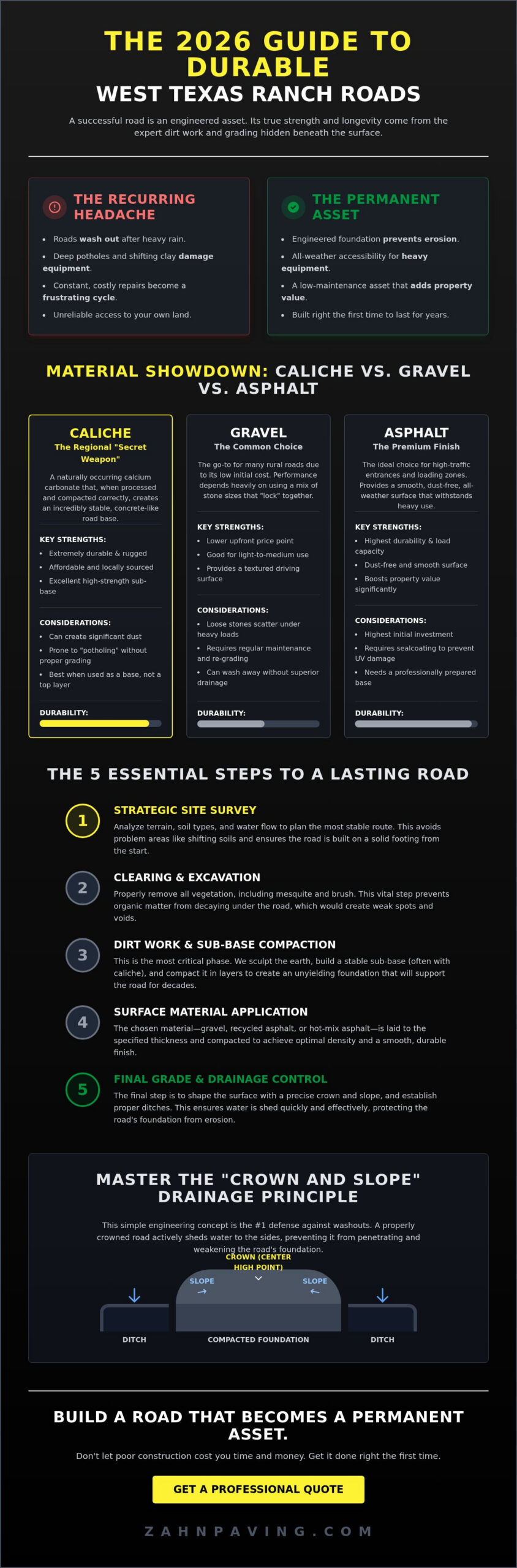
Choosing the right material for ranch road construction west texas involves balancing the upfront investment against the reality of long-term maintenance. In our region, the environment dictates the choice. You need a surface that handles the weight of cattle trailers and the relentless heat without washing away during seasonal downpours. While some competitors suggest gravel is always the most cost-effective choice, local property owners know that West Texas soils require more specialized solutions to prevent constant repairs.
Standard gravel is often the first thought for rural roads because of its lower initial price point. However, loose stones tend to scatter under heavy tires, especially on inclines. To prevent this, focus on “locking” the stones together. Using a mix of sizes allows smaller particles to fill the gaps between larger rocks, creating a tighter bond that resists displacement. For detailed standards on cross-sections and drainage, the Federal Highway Administration provides a comprehensive guide on gravel road construction and maintenance. Proper drainage is what keeps these materials from migrating into your pastures when the clouds finally break.
Why Caliche is King in the South Plains
Caliche is the regional “secret weapon” for durable roads. This calcium carbonate material is found throughout West Texas and, when properly processed, creates an incredibly stable road base. We use specific compaction techniques to ensure the caliche sets with a concrete-like finish. It’s affordable and rugged. However, leaving caliche as a top layer can lead to significant dust issues and “potholing” if it isn’t graded correctly. It performs best as a high-strength sub-base or when treated with a topical binder to keep the surface intact.
Asphalt for High-Traffic Ranch Entrances
For main ranch house access or heavy-use loading zones, asphalt paving lubbock tx makes significant financial sense. It provides a dust-free, all-weather surface that can withstand the structural demands of hauling heavy cattle trailers and hay trucks. The key is the maintenance schedule. The West Texas sun is brutal on binders. To keep the asphalt from oxidizing and becoming brittle, we recommend regular sealcoating. This protects the surface from UV damage and ensures your road remains a permanent asset rather than a liability. If you aren’t sure which material fits your soil type, our team can help you evaluate the best dirt work and surfacing options for your specific acreage.
The Critical Role of Dirt Work and Drainage
The success of ranch road construction west texas isn’t determined by the quality of the asphalt or gravel you see on top. It’s decided by the stability of the ground underneath. Approximately 90% of rural road failures in our region stem directly from poor earth works. When the foundation isn’t properly prepared, the shifting West Texas clay and sandy loam will eventually swallow the surface material, leading to deep ruts and expensive repairs. We approach every project by first addressing the soil’s load-bearing capacity and the natural flow of water across your acreage.
Excavation is the first line of defense. For heavy-duty ranch roads, we often dig deeper than standard residential driveways to remove organic matter and reach stable sub-soil. This is especially vital in areas with high clay content that expands and contracts with moisture. Once the path is cleared, we implement the “Crown and Slope” principle. This involves creating a high point in the center of the road that gently tapers toward the edges. This design forces water to shed off the driving surface rather than pooling in the center, which is the primary cause of potholes and base saturation.
Professional Grading and Leveling
Precision is key on the relatively flat terrain of the South Plains. We utilize laser-guided equipment to achieve the exact angles needed for effective drainage. Without this level of accuracy, you’ll often see “washboarding” or standing water that weakens the road base over time. Every inch of the sub-grade must be mechanically compacted before any caliche or stone is applied. This creates a dense, unyielding platform that can support the concentrated weight of heavy cattle trailers without sinking or shifting.
Managing Erosion and Runoff
West Texas weather is famous for long droughts followed by intense, sudden downpours. These flash floods can turn a minor dip in the road into a major washout in minutes. Identifying and mitigating low-water crossings is a priority during the design phase. We install culverts and strategic ditches to channel runoff safely away from the road structure. To protect the shoulders from scouring, we often use rip-rap or wingwalls at pipe entrances and exits. Maintaining a consistent 2% grade slope ensures that rainwater sheds immediately into adjacent pastures, preventing the saturation that leads to structural collapse during West Texas flash floods. This proactive approach to drainage turns a simple path into a reliable, all-weather thoroughfare.
5 Steps to Constructing a Durable Ranch Road
A reliable thoroughfare is the result of a disciplined, five-step execution. In ranch road construction west texas, skipping a single phase often leads to structural failure within the first two years. We follow a specific sequence to ensure every property owner receives a surface that handles heavy trailers and stays intact during a drought or a deluge. This process turns raw land into a permanent logistical asset.
- Step 1: Site Survey and Design. We map the path of least resistance, identifying natural drainage patterns and soil variations across your acreage.
- Step 2: Clearing and Grubbing. This involves heavy-duty excavation to remove mesquite, brush, and organic debris that would otherwise rot and create soft spots under the surface.
- Step 3: Rough Grading and Sub-Grade Prep. We shape the raw earth to establish the necessary crown and shoulders, ensuring water moves away from the future roadbed.
- Step 4: Base Layer Application. We install and compact thick layers of caliche or crushed stone to create a rigid, load-bearing platform.
- Step 5: Surface Finishing and Compaction. The final pass seals the material, creating a smooth, dense finish that resists wind erosion and water penetration.
Planning the Route
The shortest distance between two points isn’t always the best choice for a ranch road. We look for high ground to avoid “wet spots” and high-clay areas that shift violently during seasonal rains. If your operation requires semi-trucks or large stock trailers, we plan for wide turn-around radiuses and generous entry points. This prevents heavy equipment from catching tires on soft shoulders. Balancing the visual appeal of the road with the most efficient logistical path ensures your property is both beautiful and functional for daily work.
Compaction: The Key to Longevity
A standard farm tractor or a pickup truck doesn’t provide enough weight to stabilize a road base. We use heavy pneumatic or vibratory rollers to achieve maximum soil density. This process requires reaching the “optimum moisture content” in the soil; too dry, and the particles won’t bind; too wet, and the base becomes unstable. We test the base by proof-rolling with heavy equipment to ensure there’s no “pumping” or deflection before the job is considered complete. If you’re ready to upgrade your property access, our team provides the expert excavation and dirt work needed to build a road that lasts for decades.
Why Choose Zahn Paving for Your West Texas Ranch?
Zahn Paving isn’t just another name in a directory of contractors. We represent four generations of craftsmanship and a deep-rooted commitment to the South Plains. When you evaluate paving companies lubbock tx, you’re looking for a partner who understands the high stakes of rural infrastructure. Since 1946, we’ve built our reputation on the strength and durability of the surfaces we leave behind. We understand the specific soil and weather patterns of this region because we’ve worked this dirt for over 75 years.
Our comprehensive fleet of heavy equipment is specifically built for the scale of West Texas ranching. We don’t just lay material; we provide the heavy lifting required for professional ranch road construction west texas. This includes specialized machinery for excavation, laser-guided grading, and high-density compaction rollers. By owning and maintaining our own fleet, we control the quality of every phase of the project. This ensures that the foundation we build during the dirt work stage is exactly what the final asphalt or concrete requires to last for decades.
The Family-Owned Difference
Reliability comes from personal accountability. We take immense pride in every project because our family name is on every truck that enters your property. Local ranchers don’t want a generic solution from a faceless corporation. They want a specialist who knows how a heavy cattle trailer reacts to a soft shoulder or a poorly graded turn. Our team provides personalized service that balances rugged durability with the polished finish expected by high-end property owners. We treat your land with the respect it deserves, ensuring the work we do today serves your operation for generations to come.
Comprehensive Dirt Work to Final Pave
We eliminate the logistical headache of managing multiple contractors. Our team handles the entire lifecycle of your road project, from the initial clearing of mesquite and brush to the final surface finishing. We manage the excavation, grading, and paving in-house to ensure no detail is overlooked. Once the build is complete, we help you protect that investment with a pavement maintenance plan tailored to the brutal West Texas sun and freeze-thaw cycles. If you’re ready to transform your property access and improve your ranch’s long-term value, Contact Zahn Paving for a professional estimate. We’ll provide the expert guidance and heavy-duty execution your land requires.
Build a Legacy on a Solid Foundation
Building a road that withstands the harsh West Texas environment requires more than just a surface layer of gravel or caliche. It demands a disciplined approach to excavation and grading to ensure water never compromises your property access. By prioritizing proper dirt work and selecting materials suited for heavy equipment, you’re making a long-term investment in your land’s value and safety. A road that fails after the first flash flood is a liability you don’t need.
Zahn Paving has specialized in South Plains dirt work since 1946. As a 4th generation family-owned company, we take personal pride in every project, ensuring your ranch road construction west texas is handled with technical expertise and local knowledge. We understand that a well-built road is the backbone of your operation. We stand behind our work because our family legacy is built on the surfaces we create.
Ready to upgrade your property? Request Your Free West Texas Ranch Road Estimate today. Your land deserves a road as rugged and reliable as the people who work it.
Frequently Asked Questions
How much does ranch road construction cost per mile in West Texas?
Total costs for building a road depend on the existing terrain, the chosen surface material, and the complexity of the drainage requirements. Factors such as the density of mesquite clearing and the number of culverts needed for low-water crossings will influence the final investment. Property owners should consult with a local contractor to get an accurate estimate based on current material rates and labor requirements.
Is caliche better than gravel for a ranch road base?
In the South Plains, caliche is often preferred because it compacts into a dense, concrete-like foundation that resists shifting. While gravel is a common choice, caliche provides superior stability for the heavy loads associated with ranch road construction west texas. It serves as an ideal sub-grade that can be left as a raw surface or topped with a more refined material.
How do I stop my ranch road from washing out during heavy rains?
The most effective way to prevent washouts is through professional grading that implements the “Crown and Slope” principle. By directing water off the center of the road and into managed side ditches, you prevent the saturation that leads to structural collapse. Installing culverts at natural drainage points ensures that flash floods pass under the road rather than over it.
Do I need a permit for ranch road construction in Lubbock County?
If your private road connects to a state highway, you must obtain a permit from the Texas Department of Transportation (TxDOT). For connections to county-maintained roads, requirements can vary by precinct. It is best to contact the Lubbock County Commissioner’s office or the specific precinct commissioner to verify if an access permit or culvert inspection is required for your property.
How long does it take to build a half-mile ranch road?
A typical half-mile project takes between three to seven days to complete from initial clearing to final compaction. This timeline assumes favorable weather and depends on the amount of dirt work required to stabilize the sub-grade. If the path requires significant excavation to remove brush or level steep grades, the process may take longer to ensure a durable result.
Can I use recycled asphalt (RAP) for my ranch road surface?
Recycled asphalt is an excellent, durable option for property owners looking for a surface that is harder than gravel but more affordable than new paving. It compacts well under heat and pressure, creating a semi-permanent surface that significantly reduces dust. It’s a reliable choice for the main thoroughfares of a ranch road construction west texas project.
How often does a gravel ranch road need to be graded?
Most rural roads require professional grading once or twice a year to maintain the necessary crown and fill in developing ruts. The exact frequency depends on the volume of heavy trailer traffic and the severity of seasonal rain events. Consistent maintenance prevents small surface issues from turning into deep potholes that can damage your ranch equipment.
What is the best way to control dust on a caliche road?
The most effective long-term solution for dust control is applying a topical binder or a professional sealcoating. While water provides temporary relief, it evaporates quickly in the West Texas heat. A sealed surface locks in the fine particles, preventing the wind from stripping away your road base and keeping your vehicles and livestock cleaner.