Does a standard asphalt driveway in Lubbock really stand a chance when surface temperatures regularly exceed 140 degrees in the peak of July? Most property owners accept cracking and shifting as an inevitable part of living in West Texas; they often watch their investment deteriorate within just 36 months of installation. You deserve a surface that doesn’t buckle under the pressure of our climate or fail because a contractor cut corners on the initial dirt work. At Zahn Paving, we believe that precision paving is the only way to combat these environmental challenges and protect your property value for the long haul.
We understand the frustration of seeing standing water after a storm or feeling the jarring bump of a settled foundation. You should expect your pavement to remain level and intact despite the constant soil shifts our region is known for. This article explains how technical engineering and proper excavation techniques can extend the life of your asphalt to 20 years or more. We will walk through the essential steps of the paving process, from stabilizing the sub-base to achieving the perfect grade for drainage. This guide provides the technical knowledge you need to ensure your next project results in a durable, high-end first impression.
Key Takeaways
- Understand how an integrated engineering approach protects your pavement from the unique challenges of Lubbock’s shifting soil and extreme heat.
- Learn why professional dirt work and site grading are the non-negotiable foundations for any long-lasting asphalt surface.
- Calculate the long-term ROI of precision paving to see how technical accuracy significantly reduces your 20-year maintenance and repair costs.
- Use our expert audit checklist to spot red flags in generic contractor quotes and ensure your property receives a professional-grade installation.
- Discover how Zahn Paving’s 75-year legacy of local craftsmanship delivers the durability and curb appeal that West Texas property owners demand.
What is Precision Paving? Defining the Standard for Lubbock Properties
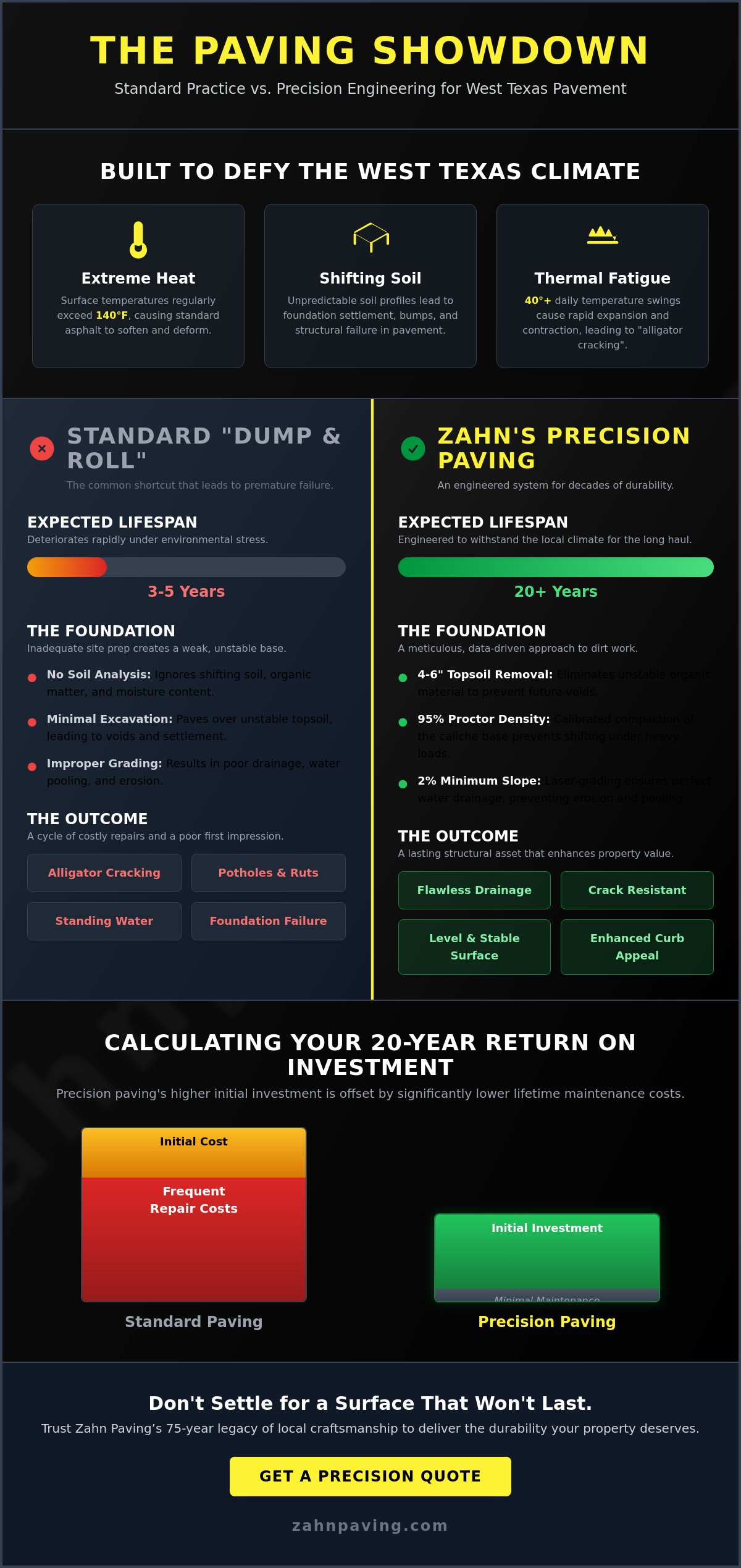
Precision paving is not just about laying a smooth surface; it is an integrated engineering approach that dictates how a property handles weight, water, and weather. This method involves rigorous sub-base preparation, strict material temperature control, and exact slope grading. Many contractors in the South Plains rely on a “dump and roll” method. This involves quickly spreading asphalt concrete and compacting it without analyzing the soil beneath. This shortcut is why standard paving often fails in Lubbock within 3 to 5 years. Precision work focuses on pavement longevity as the primary goal, ensuring the surface remains stable for decades.
The difference lies in the details. A precision paving project considers the specific chemistry of the asphalt mix and the physics of the site. Our fourth-generation experts understand that West Texas soil is prone to shifting. By using calibrated machinery and engineering-grade techniques, we create a surface that acts as a structural asset rather than a temporary fix. This direct, no-nonsense approach to construction transforms a simple driveway or parking lot into a long-term investment in your property’s value and safety.
The Role of Technical Specifications
Durability starts with the foundation. We require a 95% Proctor density in soil compaction to prevent the base from shifting under heavy loads. If the soil is not packed to this specific density, vehicle weight will inevitably cause ruts and depressions. Proper earth works provide the essential stability for the entire project. Additionally, we maintain a 2% minimum slope across the surface. This exact grade is necessary to ensure Lubbock’s sudden rainstorms drain effectively, preventing water from pooling and eroding the asphalt edges.
Why Precision Matters in West Texas
The Lubbock climate is notoriously hard on infrastructure. Summer days often peak above 100°F, while winter nights bring rapid freezes. These extremes cause standard pavement to expand and contract violently, leading to “alligator cracking” that resembles reptile skin. Thermal fatigue in the South Plains is the structural weakening of asphalt caused by the 40-degree daily temperature fluctuations common in the West Texas environment. Precision paving prevents this by using specific compaction levels and material grades that accommodate these thermal shifts. By addressing these local environmental stressors during the initial laydown, we stop potholes before they have a chance to form.
Choosing a precision approach means you value reliability and craftsmanship. It is the difference between a surface that looks good for a single season and one that stands as a legacy of quality. At Zahn Paving, our family-owned operation treats every square foot as a reflection of our local reputation. We don’t just provide a service; we deliver a durable foundation that enhances your property’s curb appeal and functional life for the long haul.
The Foundation of Precision: Dirt Work and Grading in the South Plains
Precision paving doesn’t begin with a hot mix or a concrete truck. It starts in the dirt. In the South Plains, the soil profile is notoriously unpredictable, often hiding pockets of organic matter and loose topsoil that can compromise a project’s integrity within months. We begin every project by stripping away the top 4 to 6 inches of vegetation and unstable earth. Removing this debris prevents the formation of underground voids that lead to surface cracking and potholes as the material decomposes over time.
West Texas properties rely on a caliche base as the local standard for stability. This calcium carbonate material provides a rigid platform that withstands the heavy thermal expansion common in Lubbock. Using laser-grading technology, we ensure the site has a consistent 1% to 2% slope. This precise calibration moves water away from structures and prevents the ponding that causes 85% of premature pavement failures. Property owners who prioritize these early stages often benefit from a lower Life-Cycle Cost Analysis, as the initial investment in dirt work reduces the frequency of major overlays and structural repairs.
Step 1: Sub-Grade Excavation and Stabilization
The first task is identifying “soft spots” in the local caliche and clay mix. We use a process called proof-rolling, where a loaded dump truck or heavy roller traverses the site to reveal areas that flex or “pump” under pressure. If the ground yields, we excavate deeper and replace the material with stabilized fill. This foundational rigor is essential because concrete paving Lubbock requires the same level of sub-grade preparation as asphalt to prevent the slabs from shifting or buckling under the West Texas sun.
Step 2: Base Installation and Compaction
Once the sub-grade is set, we install the base material in controlled lifts. Residential driveways typically require a 6-inch compacted base, while commercial parking lots designed for heavy freight demand 10 to 12 inches of material. The moisture content of the caliche is monitored closely; if it’s too dry, the particles won’t lock, and if it’s too wet, the base becomes spongy. Vibratory compaction machines use rapid oscillations to settle the aggregate into a dense, interlocking mass that serves as the backbone for high-durability surfaces. This level of precision paving ensures the finished surface can handle the 100-degree summers and freezing winters of the Panhandle without failing. If you’re ready to start your project with a solid foundation, you can request a site evaluation from our team to see the Zahn difference firsthand.
Precision Asphalt vs. Standard Paving: Calculating ROI and Longevity
Choosing the lowest bid for an asphalt project often leads to the highest total cost of ownership. In Lubbock, where temperature swings and soil movement are constant, precision paving is a calculated investment in durability. A budget-paved lot usually requires a complete overlay within 8 to 12 years because the sub-base was rushed or the materials were thin. By contrast, a lot engineered to FHWA pavement design and construction standards can reach a 20-year lifespan with only routine care. The math is simple; paying a 15% premium for quality upfront prevents a 100% replacement cost a decade too early. We don’t just lay asphalt; we build assets that retain their integrity under the West Texas sun.
Maintenance Savings Over Time
Precision grading is the foundation of every Zahn Paving project. We ensure water moves off the surface immediately because water pooling causes 90% of asphalt failures in our region. When you eliminate standing water, you drastically reduce the frequency of asphalt maintenance summer tasks like pothole patching and deep crack injection. A solid initial build allows you to follow a predictable pavement maintenance plan rather than reacting to expensive emergencies. This proactive approach typically cuts long-term repair costs by 50% over the life of the pavement. Quality paving means you spend less time managing contractors and more time managing your business.
Property Value and First Impressions
The “Zahn Signature” look provides an immediate visual and financial boost to any property. We focus on smooth edges, crisp striping, and seamless transitions that signal professional care to every visitor. For Lubbock office parks, a pristine parking lot can increase tenant retention rates by as much as 20%. Property managers know that a crumbling, graying lot drives away high-end clients and lowers lease rates. For residential owners, a professionally paved driveway creates a psychological sense of stability for potential buyers. They see a property that’s been maintained from the ground up, which often translates to higher closing prices. Our work ensures your first impression is one of strength and reliability.
- 20-Year Lifecycle: Precision paving lasts up to 10 years longer than budget alternatives.
- Grading Excellence: Proper slopes prevent the water penetration that destroys sub-bases.
- Valuation Boost: High-quality asphalt increases the appraisal value of commercial and residential assets.
- Reduced Repairs: Correct compaction reduces the frequency of sealcoating requirements.
The Precision Paving Audit: A Checklist for Lubbock Property Owners
Choosing a contractor for precision paving shouldn’t feel like a gamble. A vague estimate is the first sign of a project destined for failure. In Lubbock, where soil shifts and temperatures often swing 40 degrees in a single day, technical details matter. Use this audit to ensure your investment stands up to the harsh West Texas climate. A professional quote provides granular data; if it lacks specifics, the contractor likely plans to cut corners on material or labor.
What Your Estimate Should Include
A reliable estimate is a roadmap for the entire project. It should clearly define the scope of work so there are no surprises once the heavy equipment arrives on site. Look for these three critical components:
- Exact depth of asphalt: Demand to see “compacted thickness” rather than “loose thickness.” A 2 inch compacted layer requires significantly more material and effort than a 2 inch loose spread that thins out after rolling.
- Base material specifications: Your pavement is only as strong as what sits beneath it. The quote should specify 6 to 8 inches of crushed caliche or recycled concrete base to provide the necessary structural support.
- Drainage and slope: Water is the primary enemy of asphalt. The estimate must include a plan for a minimum 1% to 2% slope to ensure water moves off the surface and away from your building foundations.
Questions to Ask Your Contractor
Ask direct questions to gauge technical expertise and local accountability. If a contractor hesitates or gives vague answers, they may lack the experience required for high-end West Texas projects.
- “How do you handle the 50 plus freeze-thaw cycles Lubbock experiences annually?” Proper asphalt mix selection and high-density compaction are the only defenses against the cracks these cycles cause.
- “What is your process for testing compaction density?” We aim for a 95% density rating. This ensures the surface doesn’t rut or shift when subjected to heavy vehicle traffic or summer heat.
- “Do you own your own equipment, or do you sub-contract the dirt work?” Companies that own their pavers, rollers, and graders maintain tighter control over the project timeline and the final quality of the finish.
Watch out for quotes that lack a local physical address or a Texas business license. A generic, one-page estimate often leads to hidden costs or a total lack of support if a problem arises. As a family-owned and operated business, Zahn Paving stakes its reputation on every square foot we lay. We recommend asking for at least three Lubbock-based references from the last 5 years. Checking a job site that has already survived five West Texas winters is the best way to verify a contractor’s durability and craftsmanship.
Why Zahn Paving is the Choice for South Plains Precision
Choosing the right contractor in Lubbock means finding a team that understands the local climate and geology. The South Plains environment doesn’t forgive shortcuts or poor materials. Since 1950, the Zahn family has built a reputation for stability and excellence across West Texas. We aren’t just another asphalt company. We’re a full-service contractor that manages every phase of your project. This includes heavy dirt work, precision paving, and final striping. By keeping these services in-house, we maintain total control over the quality of the finish.
Our family values are built into every layer of asphalt we lay. We believe in doing it right the first time. This isn’t just a slogan; it’s a practical business model that protects your long-term investment. When a job is engineered correctly from the base up, it prevents the cracks and potholes that plague inferior work. We focus on durability so you don’t have to worry about costly repairs five years down the road. Our team treats every property as if it were our own, ensuring the result is both functional and aesthetically sharp.
A Legacy of West Texas Craftsmanship
Reliability is earned over decades, not days. As a fourth-generation family-owned and operated business, Zahn Paving brings 75 years of experience to every job site. We provide direct communication and no-nonsense assessments of your property’s needs. Whether we’re laying a residential driveway or engineering municipal roadways for Lubbock County, the approach remains the same. We use high-grade materials and heavy-duty equipment to ensure every surface we pave stands up to the intense West Texas sun.
Ready for a Precision Paving Estimate?
Every successful project starts with a technical plan. Our consultation process is thorough and transparent. We perform on-site measurements and conduct a site-specific soil analysis to determine the necessary base depth. This level of precision paving ensures your parking lot or driveway remains smooth for its entire intended lifespan. We stand behind our name on every Lubbock job site because our reputation is our most valuable asset. Request your precision paving quote from Zahn Paving today to secure the future of your property.
Secure Your Property’s Value with Expert Engineering
A durable surface starts long before the first load of asphalt arrives. It requires meticulous dirt work and grading to handle the unique soil conditions of the South Plains. When you prioritize precision paving, you aren’t just buying a parking lot; you’re securing a long-term asset that withstands the Texas heat. Standard paving often fails because it lacks the structural foundation required for true longevity. By focusing on engineering and ROI, property owners ensure their investment remains functional and attractive for decades.
Zahn Paving has served the Lubbock community as a family owned and operated business since 1946. As fourth-generation paving experts, we provide a comprehensive dirt-to-striping service that guarantees every phase of the job meets our rigorous standards. We don’t cut corners because our family name is on every project we finish. You deserve a surface that reflects the pride you take in your property. We look forward to helping you build a foundation that stands the test of time.
Get Your Precision Paving Estimate from Zahn Paving
Frequently Asked Questions
What is the difference between precision paving and regular asphalt paving?
Precision paving differs from standard jobs by adhering to strict engineering tolerances and site-specific soil stabilization. While standard paving might focus on surface appearance, precision paving involves laser-guided grading and exact aggregate ratios to prevent shifting. This method ensures that 100 percent of the surface meets load-bearing requirements for heavy equipment or high-volume traffic. It’s a calculated approach that turns a simple driveway into a long-term property asset.
How long does a precision-paved driveway last in the Lubbock climate?
A precision-paved driveway in Lubbock typically lasts between 20 and 30 years when maintained correctly. West Texas experiences over 260 sunny days annually, which can degrade inferior asphalt through UV oxidation. By using high-quality binders and proper compaction, we build surfaces that withstand the 40-degree temperature swings common in our region. This durability protects your investment from the brittle cracking often seen in thinner, cheaper applications.
Does precision paving require special maintenance?
Precision paving doesn’t require unique maintenance, but it does reward consistent care with a longer lifespan. You should apply a professional-grade sealcoat every 3 to 5 years to protect the binder from the intense West Texas sun. Keeping the surface clear of debris and repairing small cracks immediately prevents water from reaching the sub-base. These simple steps ensure the structural integrity of your pavement remains intact for decades.
Can precision paving fix my existing drainage issues?
Yes, precision paving is designed to resolve standing water and poor runoff issues through advanced topographical mapping. We use laser-leveling technology to ensure a minimum 2 percent slope, which directs water away from your building’s foundation. Proper drainage is the most critical factor in preventing potholes and base failure. By correcting the grade before laying the asphalt, we eliminate the pooling that causes 90 percent of premature pavement failures.
Why is grading so important for asphalt longevity in West Texas?
Grading is vital in West Texas because our local soil, often high in sand and silt, shifts easily during heavy rain events. A precise grade provides a stable platform that distributes weight evenly across the entire surface. Without a 100 percent level and compacted base, the asphalt will flex and crack under the weight of vehicles. This foundation work is the invisible part of the job that determines if your pavement lasts 5 years or 25 years.
How much more does precision paving cost compared to a standard job?
Precision paving generally involves a higher initial investment than a standard job because of the intensive site preparation and material quality. According to data from the National Asphalt Pavement Association, high-quality pavement can reduce long-term maintenance costs by up to 50 percent over its lifecycle. You’re paying for the specialized equipment and engineering that prevents expensive repairs later. At Zahn Paving, we view this as a way to maximize your property’s curb appeal and resale value.
What time of year is best for paving in Lubbock, TX?
The best time for paving in Lubbock is between April and October when ground temperatures stay consistently above 50 degrees Fahrenheit. Hot-mix asphalt requires specific thermal conditions for proper compaction and bonding. While we work year-round, the dry heat of a West Texas summer actually helps the curing process. Scheduling your project during these months ensures the smoothest finish and the strongest bond between the asphalt layers.
Is a caliche base better than gravel for Lubbock paving projects?
A caliche base is often superior for Lubbock projects because it’s a locally sourced material that binds exceptionally well when compacted. Caliche contains natural calcium carbonate which acts as a cementing agent, creating a rock-hard foundation that outperforms loose gravel. In the 806 area code, using caliche provides a stable sub-grade that resists the expansion and contraction of our native clay soils. It’s the regional standard for durability in heavy construction.