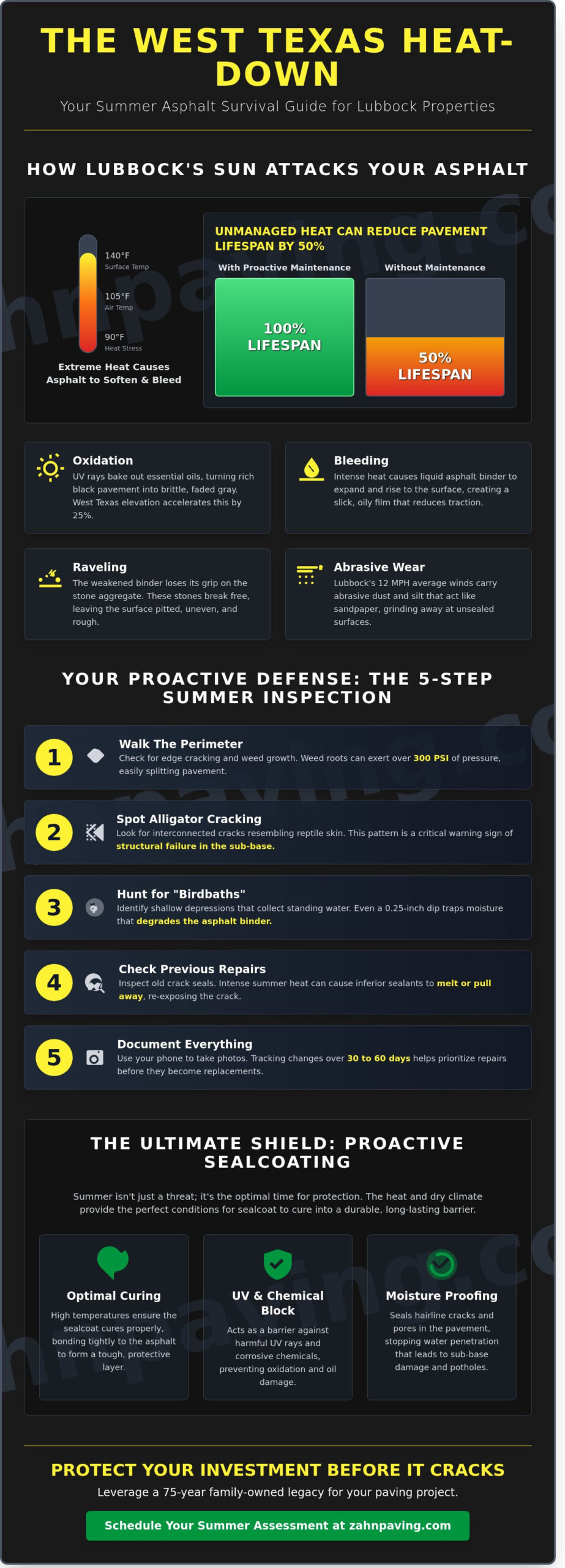
Last July, a local property manager in Lubbock watched as their five-year-old parking lot began to “bleed” oil during a stretch of 105-degree afternoons. This phenomenon happens when the West Texas sun pushes asphalt surface temperatures past 140 degrees, causing the binder to soften and rise to the top. It’s a clear signal that your pavement is losing its structural integrity. At Zahn Paving, we’ve seen how these extreme conditions can lead to a 50% reduction in a lot’s lifespan if left unmanaged. You understand that your property is a significant investment; the brutal heat shouldn’t be the reason you’re forced into early, expensive replacements.
We’re here to help you stay ahead of the damage. This guide provides a professional asphalt maintenance summer checklist designed specifically for our unique climate. You’ll learn how to stop UV-induced oxidation and prevent small cracks from becoming major liabilities. We’ve compiled our decades of experience as a family-owned and operated team into a clear schedule that protects your curb appeal. From sealcoating timing to moisture management, this overview ensures your pavement remains as durable and reliable as the Zahn name itself.
Key Takeaways
- Identify how extreme West Texas heat accelerates oxidation and raveling, compromising the structural integrity of your pavement.
- Master a professional inspection checklist to spot edge cracking and alligator patterns before they require expensive structural repairs.
- Establish a high-performance routine for asphalt maintenance summer tasks to shield your surface from corrosive chemicals and heat-intensified oil damage.
- Learn why the summer climate provides the optimal curing environment for sealcoating to block harmful UV rays and water penetration.
- Leverage a 75-year family-owned legacy to ensure your paving project is a long-term investment in your property’s safety and curb appeal.
Understanding the Impact of West Texas Heat on Your Asphalt
Lubbock property owners face a unique set of environmental challenges that can destroy a parking lot or driveway in a single season. During a typical summer, the South Plains can experience 60 to 90 days where temperatures exceed 90 degrees Fahrenheit. This sustained heat triggers a process called oxidation. When asphalt is exposed to intense solar radiation, the oils that keep it flexible begin to evaporate. This leaves the pavement brittle and transforms its color from a deep, rich black to a dull, “dead” gray. Without proactive asphalt maintenance summer heat turns a flexible asset into a fragile liability.
High temperatures also cause “bleeding,” where the liquid asphalt binder expands and rises to the surface. This creates a slick, oily film that reduces traction and creates a mess for pedestrians. As the binder degrades, the pavement loses its grip on the stone aggregate. We call this “raveling.” Once these stones break free, the surface becomes pitted and uneven. In Lubbock, the problem is compounded by high-velocity winds that average 12 miles per hour. These winds carry abrasive dust and silt that act like sandpaper, grinding away at unsealed surfaces and accelerating the wear process. The Zahn family has seen how these elements combine to shave years off a pavement’s lifespan if left untreated.
- Oxidation: The loss of essential oils that leads to cracking and graying.
- Raveling: The separation of aggregate from the binder, creating a rough, gravel-like surface.
- Bleeding: The migration of liquid asphalt to the surface, causing tracking and slick spots.
- Abrasive Wear: Wind-blown dust acting as an industrial sandblaster on your investment.
UV Radiation and the Chemical Breakdown of Pavement
UV rays break down the molecular bonds in asphalt binders, stripping away the glue that holds your driveway or parking lot together. West Texas sits at an elevation of roughly 3,200 feet, which means the atmosphere provides less protection against solar radiation than coastal regions. This higher UV exposure causes the binder to lose its elasticity 25 percent faster than in more humid, low-altitude climates. You’ll notice the visual transition from black to gray as a clear signal that the chemical structure is failing and requires professional attention.
The Danger of Softening and “Scuffing” Damage
When surface temperatures hit 140 degrees, the asphalt becomes pliable and vulnerable to physical trauma. Turning the wheels of a vehicle while stationary, known as power steering scuffing, can literally tear the surface apart. This creates unsightly tire marks and deep gouges that trap water during the rare West Texas rainstorms. Soft spots are particularly dangerous when the base layer is compromised by heat. Zahn Paving recommends that property managers limit heavy delivery truck traffic between 2:00 PM and 5:00 PM when the pavement is at its softest. Prioritizing asphalt maintenance summer schedules helps protect your property’s curb appeal and ensures the durability of your asphalt for decades to come. Investing in precision paving techniques engineered for West Texas conditions is the most effective way to build a surface that resists these extreme temperature-related stresses from the start.
How to Perform a Summer Asphalt Inspection in Lubbock
Routine asphalt maintenance summer inspections keep your property safe and functional. You should start by walking the entire perimeter of your lot. Check for edge cracking and weed encroachment. Weeds aren’t just an eyesore; their roots can exert over 300 pounds of pressure per square inch, which easily splits pavement. Look closely for alligator cracking. This pattern of small, interconnected cracks looks like reptile skin and indicates a structural failure in the sub-base. You don’t want to ignore these spots, as they quickly turn into deep potholes once traffic hits them.
You also need to spot “birdbaths.” These are shallow depressions that collect standing water. Even a 0.25-inch dip can trap moisture that degrades the asphalt binder over time. Inspect any previous crack seals you’ve had installed. Lubbock’s 100-degree days in July and August can cause inferior sealants to melt or pull away from the edges of the crack. Document every finding with your phone’s camera. Tracking changes over 30 to 60 days helps you prioritize repairs before they become expensive replacements.
Identifying Heat-Induced Cracks and Potholes
Lubbock’s dry summer air causes the clay-heavy soil in the South Plains to shrink. This movement shifts the pavement above and creates tension. You can often handle hairline cracks under 0.25 inches with basic filler or DIY kits. Structural potholes are a different story. They require professional saw-cutting and hot-mix asphalt to restore the surface’s integrity. Patching these areas immediately protects the sub-base. A damaged sub-base is responsible for 90% of total pavement collapses, so speed is essential during the high-heat months. Summer cracks that go unrepaired also allow moisture to penetrate the base layer, setting the stage for serious freeze thaw pavement damage once West Texas temperatures begin to drop in the fall.
Checking Drainage Before West Texas Summer Storms
Late summer storms in Lubbock are often sudden and heavy. A single “monsoon” style storm can drop 2 or 3 inches of rain in a very short window. This volume of water will wash out a compromised base if your drainage is blocked by dirt or tumbleweeds. Clear all debris from curbs and drains to ensure water flows away from your high-traffic areas. If you notice water pooling for more than 24 hours after a rain, it’s time to consider dirt work and grading services. Proper drainage is the only way to ensure your asphalt investment lasts for decades. If you’re unsure about the state of your lot, scheduling a professional site walk can provide the clarity you need to protect your pavement.
Essential Maintenance Steps for a Durable Surface
Effective asphalt maintenance summer strategies begin with a clear, consistent schedule. You should clear your surface of debris at least once every 14 days. This prevents the buildup of abrasive materials that wear down the top layer. In Lubbock, the high wind speeds often deposit caliche dust across parking lots and driveways. This dust isn’t just an aesthetic issue; it acts as a desiccant, drawing essential oils out of the asphalt binder and making the surface brittle.
Oil leaks represent the most immediate threat during the hottest months. When ambient temperatures in West Texas hit 100 degrees, the surface temperature of your pavement can exceed 150 degrees Fahrenheit. At these levels, the asphalt binder softens significantly. Motor oil and transmission fluid are petroleum-based solvents that react with the softened binder. Research shows that oil penetrates the pavement structure 10 times faster in high heat than in cooler conditions. If you don’t address a fresh leak within 48 hours, the damage often becomes permanent, requiring a structural patch rather than a simple cleaning.
Surface Cleaning and Oil Spot Remediation
Cleaning oil spots requires a methodical approach to protect the integrity of the pavement. Zahn Paving recommends using professional-grade, biodegradable degreasers. Follow these steps for the best results:
- Apply the cleaner directly to the stain and let it sit for 15 to 20 minutes.
- Scrub the area with a stiff-bristled nylon brush to break the chemical bond.
- Rinse the area with low-pressure water.
Avoid high-pressure washing systems that exceed 2,000 PSI. Excessive pressure can strip away the fine aggregates and the protective binder, leaving the surface porous. Removing caliche dust is equally vital. Because caliche is highly absorbent, it traps moisture against the asphalt during rare summer rainstorms, which leads to localized stripping of the aggregate.
Vegetation Control and Edge Reinforcement
Vegetation is a silent destroyer of pavement. Roots from weeds like bindweed or crabgrass can exert up to 300 PSI of pressure as they grow. This force is more than enough to leverage small cracks and destroy a driveway from below. To prevent this, apply a glyphosate-based herbicide along the edges and within visible cracks. Do this early in the morning when the wind is low to prevent drift onto your landscaping.
Reinforcing the shoulder of your pavement is a critical part of asphalt maintenance summer planning. Approximately 40% of pavement failures begin at the edges where the asphalt meets the soil. If the soil erodes, the edge of the asphalt loses its lateral support and begins to crumble under the weight of vehicles. You can prevent this by backfilling the edges with crushed stone or compacted topsoil to create a stable transition. This simple step preserves the “Zahn quality” of the installation for years. Finally, don’t overlook professional striping. Clear, bright lines improve traffic flow and can increase parking capacity by up to 20% by organizing the space effectively.
Why Summer is the Best Time for Sealcoating in Lubbock
Summer isn’t just the busiest season for construction. It’s the most effective window for asphalt maintenance summer projects because of how sealant reacts to heat. Sealcoating creates a literal shield for your pavement. In Lubbock, where the UV index frequently hits 10 or higher during July, the sun acts as a constant abrasive. It bakes the oils out of your asphalt, leaving it brittle and gray. A professional sealcoat application blocks these rays and prevents water from seeping into the base layers. Keeping moisture out of the pavement structure during summer is especially important because trapped water is the primary trigger for freeze thaw pavement damage that can devastate your surface when winter temperatures arrive.
The visual transformation is immediate. A fresh coat restores that deep black finish, which provides a sharp contrast for striping and improves curb appeal. Beyond looks, it’s a financial strategy. Regular sealcoating every three to five years can extend the life of a parking lot by 300 percent compared to neglected surfaces. This prevents the need for a full asphalt overlay, which is a much more expensive and labor-intensive process. Maintenance is always cheaper than reconstruction.
- Waterproofing: Sealant fills hairline cracks before they turn into potholes.
- Oxidation Resistance: It stops the sun from turning your flexible pavement into a brittle surface.
- Chemical Protection: It resists damage from oil and gas leaks common in high-traffic areas.
The Science of Heat and Sealant Curing
Successful sealcoating depends on the thermometer. For the sealant to form a perfect bond, ambient and surface temperatures must stay above 70°F during application and for several hours afterward. Lubbock’s summer climate provides the stability needed for the material to cure correctly. High temperatures help the sealant penetrate deep into the asphalt’s pores. We enforce a 24-hour rule for traffic after application. This window allows the chemical water-loss process to complete, ensuring the surface doesn’t scuff or track when cars return. Winter applications are risky because cold damp air prevents the sealer from hardening, often leading to premature peeling.
Choosing the Right Sealant for High-Temperature Durability
Not all sealers are built for the West Texas heat. While some contractors use low-grade hardware store mixes, Zahn Paving utilizes professional-grade materials that won’t soften or become tacky when Lubbock hits 100°F. We focus on asphalt-based sealers that expand and contract at the same rate as your driveway or parking lot. This prevents the “spider-web” cracking seen with inferior products. You can find more details on our standards by visiting our sealcoating service page. Our team selects emulsions specifically formulated for the high-friction needs of commercial properties.
Ready to protect your pavement from the West Texas sun? Contact Zahn Paving today for a professional sealcoating estimate.
Partnering with Zahn Paving for Long-Lasting Results
Choosing a contractor for asphalt maintenance summer projects shouldn’t be a gamble. It’s about protecting a physical asset that defines your property’s first impression. At Zahn Paving, we treat every parking lot and driveway as a long-term investment. Our approach is built on technical precision and a deep understanding of how Lubbock’s climate impacts pavement integrity. We don’t just patch holes; we provide a foundation for safety and curb appeal.
A professional maintenance plan is the most effective way to preserve property value. Industry data suggests that consistent upkeep can reduce total lifecycle costs by nearly 50 percent compared to reactive repairs. Implementing a professional asphalt maintenance summer strategy prevents small cracks from becoming massive liabilities during the winter freeze-thaw cycles. Our team serves as a Reliable Expert for both commercial managers and residential owners, delivering results that stand up to heavy traffic and West Texas heat.
- Commercial Reliability: We minimize downtime for your business with efficient scheduling.
- Residential Craftsmanship: We enhance the longevity and aesthetic of your home’s entrance.
- Technical Precision: Our methods prioritize structural integrity over temporary fixes.
75 Years of West Texas Paving Expertise
Experience isn’t just a number; it’s a legacy of performance. Zahn Paving is a fourth-generation family-owned and operated business. We’ve spent 75 years refining our techniques in the specific conditions of the South Plains. This history gives us a unique advantage when it’s time to evaluate your site. We understand the nuances of local soil, specifically the challenges presented by caliche. This dense, calcium-rich material requires specialized knowledge to ensure proper drainage and base stability. Our commitment to precision paving engineered for West Texas durability means every project is built on a foundation designed to outlast the region’s most demanding soil and climate conditions.
Every project we complete carries the Zahn Signature of Quality. This commitment means we use the highest grade materials and follow rigorous application standards. We don’t cut corners on preparation or curing times. Because we’re rooted in the Lubbock community, our reputation is on the line with every square yard of asphalt we lay. You aren’t hiring a faceless corporation. You’re partnering with specialists who stand behind their name and their work.
Request Your Free Summer Maintenance Quote
The best time to address pavement issues is before they require total reconstruction. We invite you to schedule a professional “eyes-on” assessment of your property. Our experts provide a detailed evaluation that identifies immediate needs and long-term risks. We don’t believe in one-size-fits-all solutions. Instead, we develop a customized maintenance plan tailored to your specific traffic patterns and budget requirements. This proactive approach can extend the functional life of your surface by 10 to 15 years.
Don’t wait for a small crack to turn into a costly pothole. A quick evaluation today saves thousands of dollars in future excavation costs. Take the first step toward a smoother, safer, and more attractive property. Contact Zahn Paving for your Lubbock asphalt needs and let our family protect your investment with the durability it deserves.
Protect Your Investment with Professional Summer Paving Care
Lubbock summers often bring more than 30 days of triple-digit temperatures, which creates a harsh environment for any paved surface. Neglecting asphalt maintenance summer needs leads to oxidation and structural cracks that compromise your property’s safety and curb appeal. By prioritizing a thorough inspection and professional sealcoating now, you ensure your pavement remains durable against the intense West Texas sun. It’s a simple step that prevents costly repairs during the winter months.
Zahn Paving has served the Lubbock community since 1946 as a fourth-generation family-owned and operated company. We specialize in the specific challenges of West Texas soil and weather conditions, maintaining an A+ reputation for excellence in commercial and residential projects. Our team brings decades of technical expertise to every job site, ensuring your investment stands the test of time. Unlike the shifting clay and limestone challenges that require specialized austin tx paving engineering strategies, our West Texas approach focuses on the unique demands of caliche soil and high-wind environments. Don’t leave your pavement’s longevity to chance when you can rely on a legacy of craftsmanship. Developing a comprehensive pavement maintenance plan for Lubbock’s unique climate is essential for maximizing your investment’s lifespan. Get a Free Summer Maintenance Quote from Zahn Paving today to secure a smooth and professional finish for your property. We look forward to helping you build a surface that lasts for years to come.
Frequently Asked Questions
Is it too hot to sealcoat my driveway during a Lubbock summer?
No, it isn’t too hot, but the application requires precise timing to succeed. We schedule most summer projects for the early morning hours when surface temperatures stay below 90 degrees. Lubbock averages 78 days per year with temperatures exceeding 90 degrees according to National Weather Service data. High heat causes sealcoat to dry too quickly, which leads to visible streaking. Our professional crews monitor pavement heat to ensure the material bonds correctly for a durable finish.
How often should I sealcoat my parking lot in West Texas?
You should sealcoat your West Texas parking lot every 2 to 3 years to maintain its structural integrity. This frequency accounts for the 3,300 hours of annual sunshine Lubbock receives, which accelerates asphalt oxidation. Regular maintenance prevents the binder from becoming brittle and cracking under pressure. If your lot sees more than 500 vehicles daily, you might need a fresh coat closer to the 24 month mark. Consistent upkeep is a long term investment in your property’s safety.
Can I use a garden hose to cool down my asphalt on 100-degree days?
You shouldn’t use a garden hose to cool hot asphalt because it causes immediate thermal shock. Rapidly dropping the surface temperature from 140 degrees to 60 degrees creates internal stress that leads to spiderweb cracking. This damage compromises the 5 inch thick base layer over time. Instead of water, rely on professional asphalt maintenance summer strategies like sealcoating. Proper shade and high quality aggregates are better solutions for heat management than artificial cooling methods.
What is the best way to fix small cracks before they turn into potholes?
Hot rubberized crack sealing is the most effective way to repair cracks before they expand into major liabilities. We heat the sealant to 350 degrees to ensure it penetrates and bonds with the existing pavement walls. This process stops water from reaching the sub-base, which prevents 90 percent of future pothole formations. Addressing cracks smaller than 0.25 inches wide now saves you from expensive excavation and full depth repairs during the winter months.
Does sealcoating actually protect against the intense Texas sun?
Sealcoating acts as a sacrificial barrier that absorbs UV radiation before it reaches the asphalt binder. Without this protection, the sun’s rays trigger a chemical reaction that strips away essential oils, making the surface brittle. A single layer of professional grade sealer can reduce UV damage by 80 percent over a 2 year period. This protection is vital in Lubbock, where the high elevation increases the intensity of solar exposure on your pavement surfaces.
How long should I wait to drive on my new asphalt during the summer?
You must wait at least 24 to 48 hours before driving on new asphalt during the summer months. In Lubbock, where afternoon temperatures often stay above 95 degrees, the curing process takes longer because the material remains pliable. Heavy vehicles like delivery trucks should stay off the surface for a full 72 hours. This waiting period ensures the pavement sets firmly, preventing tire scuffs and depressions that ruin the smooth, professional finish of the job.
Why is my asphalt turning gray so quickly in Lubbock?
Your asphalt turns gray because of oxidation caused by Lubbock’s intense sun and 12 mile per hour average wind speeds. This color change indicates that the liquid asphalt binder is drying out and losing its flexibility. Within 12 months of installation, unsealed asphalt can lose its deep black luster and start to shed fine aggregates. Implementing an asphalt maintenance summer plan helps restore the rich black color and prevents the surface from becoming a gravel pit.
Can I apply sealcoat myself or should I hire a professional?
Hiring a professional ensures you get industrial grade materials that aren’t available in local hardware stores. DIY products often contain higher water content, which leads to peeling within 6 months of application. Zahn Paving uses specialized spray rigs to apply a consistent 2 coat system that bonds to the surface. Our family owned team brings decades of experience to every project. This expertise guarantees a seamless finish that increases curb appeal and provides a lasting return on your investment.